Commute Habit Stack: Turn Travel Time into Growth
Turn 30 to 60 minutes of daily transit into learning, mindfulness, and planning with a simple commute habit stack. Examples for car, train, and bus.
Thirty minutes to work. Thirty minutes home. Five days a week. That’s 250 hours per year—equivalent to six full work weeks—spent sitting in traffic or standing on a train.
You scroll social media to pass the time. You listen to random music. You stare out the window. By the time you arrive, you feel neither rested nor productive—just… drained.
What if those 250 hours could transform you? What if your commute became your most productive time of day—when you learn languages, read books, develop skills, or simply find mental clarity?
That’s the promise of a commute habit stack. Instead of passive time-killing, you create an intentional sequence of behaviors that turns transit into your personal growth window.
What You’ll Learn
- The exact 5-habit commute stack used by 300+ professionals to reclaim 250+ hours/year
- Why commutes feel uniquely draining (and how habit stacking reverses this)
- The psychology of captive time and how to optimize it
- How to customize the stack for driving, public transit, walking, and biking
- The neuroscience of learning during commutes (it’s more effective than you think)
- A 3-week plan to make your commute automatic and valuable
Why Commutes Feel Like Wasted Time (And How to Fix It)
According to the U.S. Census Bureau’s American Community Survey, the average one-way commute in the United States is a little under half an hour. For many people that adds up to several hours a week in transit.
Long commutes are often linked in research to more stress and less time for sleep, exercise and family. You can’t always shorten the trip, but you can change what it’s for.
Why? Because commutes feel like dead time—you can’t work, you can’t fully relax, and you’re trapped in limbo.
The Two Commute Traps
Trap 1: Passive consumption You mindlessly scroll Twitter, watch random YouTube videos, or play mobile games. This doesn’t reduce stress—it increases it. Studies show passive social media use during commutes actually amplifies anxiety rather than relieving it.
Trap 2: Total disengagement You zone out completely, staring into space, letting your mind wander aimlessly. While occasional mind-wandering is healthy, daily disengagement reinforces the feeling that commutes are “lost time.”
Neither approach creates value. You arrive at work or home feeling unfulfilled.
The Solution: Intentional Habit Stacking
Habit stacking transforms context-dependent routines into automatic growth opportunities. Instead of deciding what to do each commute, you create a sequence that runs on autopilot.
Here’s the structure:
Morning commute (to work):
- After I sit down (or start driving) → I listen to a podcast episode
- After the podcast ends → I review my top 3 priorities for the day
- After reviewing priorities → I practice gratitude or visualization for 5 minutes
Evening commute (to home): 4. After I sit down (or start driving) → I listen to an audiobook chapter 5. After the audiobook → I mentally review what I accomplished today
Notice: Each step flows naturally. You’re not making decisions—you’re following a pattern. The commute becomes a valued ritual rather than dead time.
The Captive Time Advantage
Commutes offer something rare in modern life: captive time. You can’t check email, attend meetings, or do chores. You’re trapped with yourself and your thoughts.
This constraint is actually an advantage. With fewer options competing for your attention, it’s easier to stick with one thing. Your commute becomes a learning laboratory where habits can flourish precisely because other options are limited.
This aligns with environment design principles—constraints can enhance focus rather than hinder it.
The 5-Habit Commute Stack: Complete Breakdown
This stack is optimized for public transit riders but adapts easily for drivers and cyclists. We’ll cover all variations below.
Morning Commute Phase
Habit 1: Listen to an Educational Podcast (15-20 minutes)
The Stack: After I sit down on the train/bus or start my car, I play a pre-selected podcast episode.
Why it works:
- Automatic learning: No decision paralysis—the episode is already queued
- Productive start: Primes your brain for the workday
- Passive consumption: Requires no writing or note-taking (perfect for transit)
Why it works: your commute already happens at the same time every day, which makes it a reliable cue. Pairing it with listening turns time you can’t use for much else into regular practice.
Podcast selection strategy:
- Queue episodes the night before (removes morning decisions)
- Choose 15-25 minute episodes (matches commute length)
- Rotate categories: Monday = business, Tuesday = science, Wednesday = history, etc.
Recommended podcasts for learning:
- Hidden Brain (psychology and behavioral science)
- Freakonomics Radio (economics and decision-making)
- The Tim Ferriss Show (productivity and learning)
- How I Built This (entrepreneurship stories)
- Science Vs (evidence-based analysis)
Common mistake: Choosing 60-minute episodes that don’t finish. Use episodes that complete during your commute—open loops create anxiety.
Habit 2: Review Your Top 3 Priorities (3 minutes)
The Stack: After the podcast ends, I mentally (or in a notebook) review my top 3 priorities for the day.
Why it works:
- Intentional arrival: You enter work knowing exactly what matters
- Reduces decision fatigue: No morning paralysis of “what should I work on first?”
- Strategic thinking: Commute time is quieter than office chaos
The science: In Teresa Amabile and Steven Kramer’s research at Harvard Business School, making progress in meaningful work was the most powerful everyday motivator people reported. Knowing your top priorities before you arrive makes that progress easier to see.
This connects to productivity habits of successful people—most high performers plan their day before entering work mode.
How to do it:
Option 1: Mental review (if on public transit)
- Close your eyes or look out the window
- Think: “Today’s top 3 are: X, Y, Z”
- Visualize completing each one
Option 2: Notebook method (if comfortable writing)
- Use a small pocket notebook
- Write: “Top 3 for [date]:”
- List your priorities
Option 3: Phone notes (if using phone anyway)
- Open Notes app
- Type your top 3
- Set as phone wallpaper so you see it all day
What makes a good priority:
- Specific (“Finish quarterly report” not “Work on report”)
- Achievable in one day
- High-impact (moves needle on important goals)
Habit 3: Practice Gratitude or Visualization (5 minutes)
The Stack: After reviewing priorities, I practice either gratitude (listing 3 things) or visualization (imagining successful day).
Why it works:
- A calmer start: many people find a short gratitude practice takes the edge off a stressful morning
- Performance priming: Visualization activates the same neural pathways as actual performance
- Positive start: Enters work in a calm, confident state
Why it works: a few minutes spent noticing what’s going well is easy to repeat daily, and starting the workday in a better mood makes the first hour easier.
Gratitude method:
- Think of 3 specific things you’re grateful for today
- Make them concrete (“My partner made coffee” not “I have a partner”)
- Feel the gratitude—don’t just list items
Visualization method:
- Close your eyes
- Imagine your perfect workday: arriving calm, completing priorities, leaving satisfied
- See it in detail—what you’re wearing, how you feel, what you accomplish
Which to choose?
- Gratitude if you tend toward anxiety or negative thinking
- Visualization if you have a big presentation or important meeting
Evening Commute Phase
Habit 4: Listen to an Audiobook Chapter (20-30 minutes)
The Stack: After I sit down on the train/bus or start my car, I resume my current audiobook.
Why it works:
- Learning accumulation: 30 min/day = 12-15 books per year
- Mental transition: Shifts brain from work mode to home mode
- Decompression: Stories provide emotional distance from work stress
Why it works: audiobooks let you get through books during time you couldn’t use for reading. For dense non-fiction, pick one idea per chapter to remember.
Building a reading habit is easier when it’s embedded in existing routines like commuting.
Audiobook selection:
For learning:
- Atomic Habits by James Clear
- Thinking, Fast and Slow by Daniel Kahneman
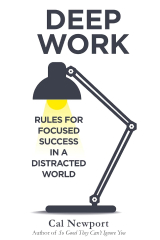
- Deep Work by Cal Newport
For narrative/fiction:
- Choose books you’d enjoy for entertainment
- Series work well (gives you continuity across weeks)
Where to get audiobooks:
- Audible (subscription)
- Libby/OverDrive (free through library)
- Scribd (unlimited listening)
Tip: Play at 1.25x-1.5x speed once comfortable. Increases comprehension and saves time.
Habit 5: Mental Review of the Day (5 minutes)
The Stack: After my audiobook chapter ends (or 10 minutes before arriving home), I mentally review what I accomplished today.
Why it works:
- Psychological closure: Prevents work thoughts from invading home time
- Positive reinforcement: Recognizing accomplishments improves motivation
- Learning consolidation: Reviewing strengthens memory formation
The science: In a field study by Giada Di Stefano, Francesca Gino, Gary Pisano and Bradley Staats, call-center trainees who spent 15 minutes at the end of the day reflecting on what they had learned performed better on a later assessment than those who didn’t. Your commute home is a natural time for that reflection.
How to do it:
5-minute review:
- What went well today? (List 2-3 wins, even small ones)
- What did I learn? (One insight or lesson)
- What will I do differently tomorrow? (One adjustment)
Don’t overthink it. This isn’t journaling—just quiet reflection.
Example internal dialogue: “Today went well. I finished the presentation, had a good conversation with Sarah about the project, and handled that client call calmly even though they were frustrated. I learned that starting with data makes clients listen better. Tomorrow I’ll apply that to the morning meeting.”
Psychological benefit: This review prevents “work rumination”—the endless mental replaying of unfinished tasks that ruins evening relaxation.
Total Time & Value Breakdown
Morning Commute (30 minutes)
| Habit | Duration |
|---|---|
| Podcast | 20 minutes |
| Review priorities | 3 minutes |
| Gratitude/visualization | 5 minutes |
| Buffer | 2 minutes |
Evening Commute (30 minutes)
| Habit | Duration |
|---|---|
| Audiobook | 25 minutes |
| Mental review | 5 minutes |
Annual Value
- Podcasts: 125+ hours of learning (250 episodes)
- Audiobooks: 125+ hours of reading (12-15 books)
- Reflection time: ~40 hours of strategic thinking
- Total reclaimed: 290+ hours of personal development
That’s equivalent to 7 full weeks of work transformed from dead time into growth time.
Customizing for Different Commute Types
For Drivers (Can’t Read or Take Notes)
Challenge: Eyes on the road, hands on wheel—limited options.
Solution: 100% audio-based stack
Morning:
- After starting car → Play podcast (queued last night)
- After podcast → Verbally state top 3 priorities out loud
- After priorities → Practice gratitude (think of 3 things)
Evening:
- After starting car → Play audiobook
- 5 minutes before home → Mentally review day
Tip: Use voice commands (“Hey Siri, play my podcast”) to keep hands on wheel.
For Public Transit Riders (Can Read/Write)
Challenge: Sometimes crowded, sometimes quiet—variable conditions.
Solution: Flexible stack with backup options
Morning:
- After sitting down → Podcast (if uncrowded) OR article reading (if crowded/noisy)
- After audio/reading → Write top 3 priorities in notebook
- After writing → Gratitude or visualization
Evening:
- After sitting down → Audiobook OR Kindle reading
- Before stop → Mental or written review
Tip: Download podcasts and books offline—don’t rely on cellular data.
For Cyclists/Walkers (Active Commute)
Challenge: Physical activity makes audio harder to follow; safety requires environmental awareness.
Solution: Lighter audio + more reflection
Morning:
- After starting ride/walk → Play instrumental music or light podcast
- Midway point → Mentally review priorities (no notebook—unsafe)
- Final 5 minutes → Gratitude practice
Evening:
- After starting ride/walk → Audiobook at lower volume (stay aware of surroundings)
- Final 5 minutes → Mental day review
Safety note: Always prioritize awareness over content consumption. One earbud max, never both.
For Work-From-Home (No Physical Commute)
Challenge: No natural transition between home and work mode.
Solution: Create “artificial commute”
Morning:
- After breakfast → Walk around block for 15 minutes (listening to podcast)
- After walk → Sit at desk, write top 3 priorities
- After priorities → 5-minute meditation
Evening:
- After closing laptop → Walk around block for 15 minutes (audiobook)
- After walk → Review day in journal
This creates the psychological boundary that physical commutes naturally provide.
The 3-Week Implementation Plan
Commute stacks are easier to build than morning/evening stacks because the trigger (sitting down, starting car) is extremely consistent.
Week 1: Audio Consumption Only
Focus: Habits 1 and 4 (podcast and audiobook)
Morning: Just play a podcast. Don’t add priorities or gratitude yet. Evening: Just play an audiobook. Don’t add review yet.
Goal: Make “sitting down = pressing play” automatic. By day 7, you should reach for your headphones without thinking.
Setup tasks:
- Download 5 podcast episodes
- Download 1 audiobook
- Create “Commute” playlist in your app
Week 2: Add Morning Planning
Focus: Habits 1, 2, 3 (podcast → priorities → gratitude)
Morning: After podcast, add priorities review and gratitude. Evening: Continue just audiobook (don’t add review yet).
Goal: Enter work each morning knowing exactly what you’ll accomplish. By day 14, this mental clarity should feel automatic.
Week 3: Add Evening Reflection
Focus: All 5 habits
Morning: Continue podcast → priorities → gratitude Evening: After audiobook, add mental day review
Goal: By day 21, your entire commute should feel intentional—you’re learning in the morning, decompressing in the evening, and arriving/leaving with clarity.
Troubleshooting Commute Stack Problems
”My Commute Is Too Short (10-15 Minutes)”
Root cause: Not enough time for full stack.
Fix: Choose shorter content or split habits across multiple days
Option 1: Micro-stack
- Monday/Wednesday/Friday: Podcast only (morning)
- Tuesday/Thursday: Priorities + gratitude only (morning)
Option 2: Speed up audio
- Play podcasts at 1.5x-2x speed
- Fits 20-minute content into 10-minute window
”My Commute Is Too Long (90+ Minutes)”
Root cause: Standard stack doesn’t fill time.
Fix: Extend each habit or add new ones
Extended morning stack:
- Podcast (30 min)
- Priorities review (5 min)
- Language learning app like Duolingo (20 min)
- Gratitude + journaling (10 min)
Extended evening stack:
- Audiobook (60 min)
- Meditation app like Headspace (10 min)
- Day review + tomorrow planning (10 min)
“I Get Carsick Reading or Looking at My Phone”
Root cause: Visual-vestibular conflict during motion.
Fix: Use 100% audio-based stack (same as driver recommendations)
Alternative for severe motion sensitivity:
- Play podcasts/audiobooks at slower speed (0.75x) to reduce cognitive load
- Look out window during audio (helps motion sickness)
- Take breaks mid-commute if needed
”My Commute Time Varies (Sometimes 20 Min, Sometimes 60 Min)”
Root cause: Unpredictable schedule makes fixed routine hard.
Fix: Modular habits that stack regardless of duration
Flexible stack:
- Always: Podcast/audiobook (plays until you arrive)
- If 30+ minutes: Add priorities/review
- If 45+ minutes: Add gratitude/meditation
Use smart playlists that adapt—start with priority content, fill remaining time with audio.
Why Quiet Accountability Makes Commute Stacks Stick
You understand the stack. You have the 3-week plan. You’re ready to transform your commute.
But here’s what usually happens: Week 1, you listen to a few podcasts. Week 2, you forget to queue episodes and scroll social media instead. By Week 3, you’re back to mindless commuting.
Not because the stack doesn’t work. Because when the only person who knows about your learning goals is you, it’s too easy to skip.
The Problem: Invisible Progress
Learning during commutes creates knowledge, but knowledge is invisible. You can’t “see” the book you listened to or “show” the podcast insights you gained.
Without visible progress, your brain doesn’t release dopamine. Without dopamine, habits don’t stick.
BJ Fogg, who runs Stanford’s Behavior Design Lab, recommends celebrating right after a behavior to help it stick. But it’s hard to celebrate learning that no one sees.
Traditional Learning Accountability Doesn’t Fit Commutes
You could tell a friend: “I’m reading more books!”
Problems:
- They’re not there during your commute to remind you
- Progress is gradual: “I read 10 pages today” doesn’t feel impressive
- No shared experience: They’re not reading the same book
Give Your Commute Habit a Booked Time
If your commute is at a predictable time, it can double as a session. Sessions run in the browser, so you do not need to be at a desk: book a 30-minute slot that overlaps your ride, write one line about what you will listen to or read, and tap Done when you arrive.
The Long-Term Transformation: What 12 Months of Commute Stacking Builds
After 3 weeks, your commute stack is automatic. After 12 months, you’ll have built something remarkable.
Benefit 1: 15+ Books Read (Without “Finding Time”)
Most people say “I wish I read more” but never do. Why? They can’t find time.
You found 250 hours. At 30 minutes per day:
- Fiction: 15-20 novels per year
- Non-fiction: 12-15 books per year
- Mix: 12-15 books total
That’s a meaningful amount of reading. From your commute.
Benefit 2: Mastery of a New Skill
Want to learn Spanish? Marketing? History?
250 hours of focused learning (podcast + audiobooks) equals:
- Language: A1 to B1 proficiency (conversational)
- Professional skill: Equivalent to a 10-week college course
- Knowledge domain: Expert-level understanding of a topic
This is how “lifelong learners” actually learn—by using small pockets of time consistently.
Benefit 3: A Calmer Commute
Using commute time for something you chose often feels better than scrolling or sitting in traffic with nothing to do. Many people report that it:
- Lowers stress, because the time feels used rather than lost
- Adds a sense of progress before the workday starts
- Improves their mood on arrival
Your commute becomes something you look forward to—a growth window, not dead time.
Benefit 4: Career Advancement
Steady learning compounds over a career. A few hours a week of focused listening or reading can add up to:
- New skills you can use at work
- Ideas and vocabulary for conversations with colleagues
- A stronger sense of progress in your career
Your commute stack gives you 5 hours/week automatically.
Key Takeaways
-
Commutes average 250+ hours per year—equivalent to 6 full work weeks of captive time
-
The 5-habit stack transforms this: podcast → priorities → gratitude (morning); audiobook → review (evening)
-
Build in 3 weeks: Week 1 is audio only, Week 2 adds planning, Week 3 adds reflection
-
Customize for your commute type: drivers use 100% audio, public transit can add reading/writing, cyclists prioritize safety
-
Annual impact is massive: 15+ books read, 250+ podcast episodes, 40+ hours of reflection—all from existing commute time
-
Quiet accountability helps: a short daily check-in makes an invisible habit visible to someone else
Next Steps:
- Tonight, queue 3 podcast episodes and download 1 audiobook
- Tomorrow morning, start with Habit 1 only (just play the podcast)
- After 1 week, add priorities and gratitude
- Join a Commute Learning Challenge for daily accountability
Ready to Transform Your Commute?
You have the stack. You have the 3-week plan. You have 250 hours waiting to be reclaimed.
But here’s the truth: most people won’t stick with it alone. Not because commute learning doesn’t work—because invisible progress is hard to sustain without external reinforcement.
- Build your 5-habit commute stack over 3 weeks
- Check in daily after your commute (takes 10 seconds)
- See 5-15 people learning during transit—proof that this is possible
- No pressure to share what you learned—just consistent presence
Commute learning transforms dead time into growth time. Quiet accountability makes it stick.
Frequently Asked Questions
Q: What if I work from home and don’t have a commute?
A: Create an “artificial commute”—a 15-30 minute walk before and after work where you follow the same stack. This provides the psychological transition between home and work mode that physical commuters get naturally. Many remote workers report this artificial boundary improves work-life balance significantly.
Q: Can I listen to music instead of podcasts/audiobooks?
A: Yes, but you lose the learning benefit. If music helps you decompress, consider a hybrid: podcast in the morning (learning mode), music in the evening (relaxation mode). The science shows that varying activities by time of day works well for habit formation.
Q: What if I commute with a partner or coworker and it would be rude to wear headphones?
A: Use the commute for conversation with intentional topics. Morning: discuss goals for the day. Evening: reflect on what you accomplished. This can be even more valuable than solo learning—verbal processing strengthens memory. Alternatively, split days: Monday/Wednesday/Friday you wear headphones, Tuesday/Thursday you chat.
Q: How do I stay focused on podcasts without zoning out?
A: Take notes (mental or physical) at one interesting point per episode. Having a “capture task” keeps attention engaged. Also, choose podcasts where hosts have distinct voices and conversational energy—monotone narrators make it easy to zone out. Speed up playback to 1.25x if you find yourself getting bored.
Q: What if my commute is unpredictable (sometimes drive, sometimes public transit)?
A: Create two parallel stacks—one audio-only (for driving), one with flexible reading options (for transit). Queue the same podcast/audiobook across both, so you can seamlessly switch. The core habits (priorities, gratitude, review) work identically regardless of commute mode.