ADHD Cleaning: How to Do Chores in 30-Minute Slots
A cleaning method for ADHD brains: one zone per half hour, a visible finish line, a set start time, and no all-day cleaning marathons that end in burnout.
The classic ADHD cleaning cycle goes like this: the mess builds until it’s unbearable, you spend a whole Saturday cleaning in a burst of energy, you’re exhausted, and the cycle starts again.
The problem usually isn’t that you don’t care or don’t know how to clean. Chores are boring, never finished, and have no clear start. That combination is close to the worst possible task for an ADHD brain.
This guide replaces the marathon with something smaller: one zone, one half hour, at a set time.
Why chores are so hard with ADHD
- No deadline. Nothing happens at a specific moment if the dishes wait, so there’s never a “now.”
- No finish line. “Clean the kitchen” can mean ten minutes or three hours. When the end is unclear, starting feels risky.
- Boring by design. ADHD attention tends to follow interest and urgency. Folding laundry has neither.
- Too many steps. Cleaning a room involves dozens of small decisions: where does this go, what do I do with that. Each decision costs executive function.
- Distraction everywhere. You pick up a book to put it away and start reading it.
Every tactic below targets one of these problems.
The 30-minute slot method
1. Split the home into small zones
Not rooms, zones: things you could finish in under 30 minutes.
- The sink and the counter next to it
- One load of laundry, washed or folded
- The desk surface
- The bathroom sink and mirror
- The floor of one room
- The fridge: throw out what’s gone off
Write your zones on a list. This is your menu; you never have to think about “the whole house” again.
2. Give each slot one zone and a visible finish
A slot is one zone with a finish you can see: “sink empty and counter wiped,” not “kitchen.” When the finish is visible, you know when you’re done, which makes starting less risky.
3. Put the slot at a time, not “when I have time”
“I’ll do laundry this weekend” has no start. “Laundry, one load, Saturday 10:00” does. Put slots in your calendar like appointments.
Pick times next to something you already do: right after breakfast, after you get home, while dinner is in the oven. This is habit stacking for chores.
4. Stop at the end of the slot
When the 30 minutes are up, stop, even if you’re on a roll. Ending on purpose keeps chores from becoming the all-day marathons that teach your brain to dread them. If you want to do more, book another slot.
5. Do a few slots a week, not everything at once
Two or three slots a week, every week, keeps a home livable better than one monster session a month. You can add more slots later.
A sample week
| Day | Slot | Zone |
|---|---|---|
| Monday | 12:00 | Laundry, one load in and out |
| Tuesday | 19:00 | Sink and counter |
| Thursday | 19:00 | Desk surface and the paper pile |
| Saturday | 10:00 | Bathroom sink, mirror, toilet |
| Sunday | 18:00 | Fold and put away laundry |
That’s two and a half hours across the week, in pieces you can start.
Tactics for during the slot
Put on a timer you can see. A visual timer shows the half hour shrinking, which helps if time blindness makes 30 minutes feel endless or vanish.
Carry a “doesn’t belong here” basket. Instead of walking each item back to its room (and getting distracted on the way), drop it in the basket. Empty the basket in its own slot.
Start with the easiest visible win. Clear the counter before scrubbing it. Seeing progress early keeps you going.
Use sound. A podcast or playlist you only allow during chores makes boring tasks more bearable and gives your brain something to look forward to.
Lower the bar. Wiped is better than spotless. “Good enough to use” is a perfectly good finish line.
Clean alongside someone
Many people with ADHD find chores far easier when someone else is around, even if that person is doing something else. That’s body doubling, and it works for cleaning as well as for desk work.
Ways to try it:
- Clean at the same time as a housemate or partner, each doing your own zone.
- Call a friend who’s also cleaning, on speaker, phones in pockets.
- Join a scheduled online session where other people are doing their own tasks.
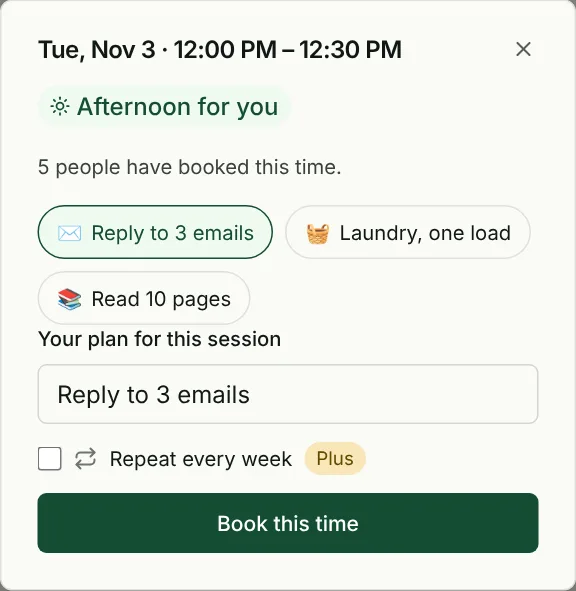
Disclosure: Cohorty publishes this journal. In Cohorty you book a 30-minute session, write the zone as your plan (“Laundry, one load”), and do it while others in the session do theirs. There’s no camera, so the state of your room doesn’t matter. When the zone is done you tap Done, and if you miss a session nothing resets. Our guide to ADHD-friendly focus sessions shows how to book several small slots in a day.
When the mess is already overwhelming
If things have piled up past what slots can handle, start with triage, not cleaning:
- Trash first. One slot, one bag, only things that are clearly rubbish. No decisions needed.
- Dishes second. Clean dishes make every other task easier.
- One clear surface. A single clear table or counter gives you somewhere to work and a visible win.
- Then back to zones.
Be kind about how you got here. Messes build up for lots of reasons: low energy, depression, busy weeks, or just ADHD. If the mess comes with feeling low most days, or affects your safety or health, it’s worth talking to a doctor; there may be more going on than cleaning.
Keep it going
- Book next week’s slots before this week ends. Five minutes on Sunday saves deciding every day.
- Count slots, not cleanliness. “I did three slots this week” is a win you control. A spotless house isn’t.
- Expect missed slots. Skip it, don’t reschedule it in your head, and do the next one. If streaks make you quit after a miss, avoid tracking them; see what to do after you break a streak.
Common questions
Why is cleaning so hard with ADHD?
Chores are boring, open-ended and have no deadline, which makes them hard to start and easy to abandon. Smaller zones, set times and visible finish lines address each of those.
How long should an ADHD cleaning session be?
Short enough to start without dread and long enough to finish one zone. Thirty minutes works for many people; 15 minutes is fine on low-energy days.
Does body doubling work for cleaning?
Many people with ADHD find cleaning easier with someone else present, in person or online. Research on body doubling is limited, so try a few sessions and see whether you start more often.
What if I don’t finish the zone in 30 minutes?
Stop anyway and note where you got to. Either make the zone smaller next time or book a second slot. Finishing on time matters more than finishing the zone.