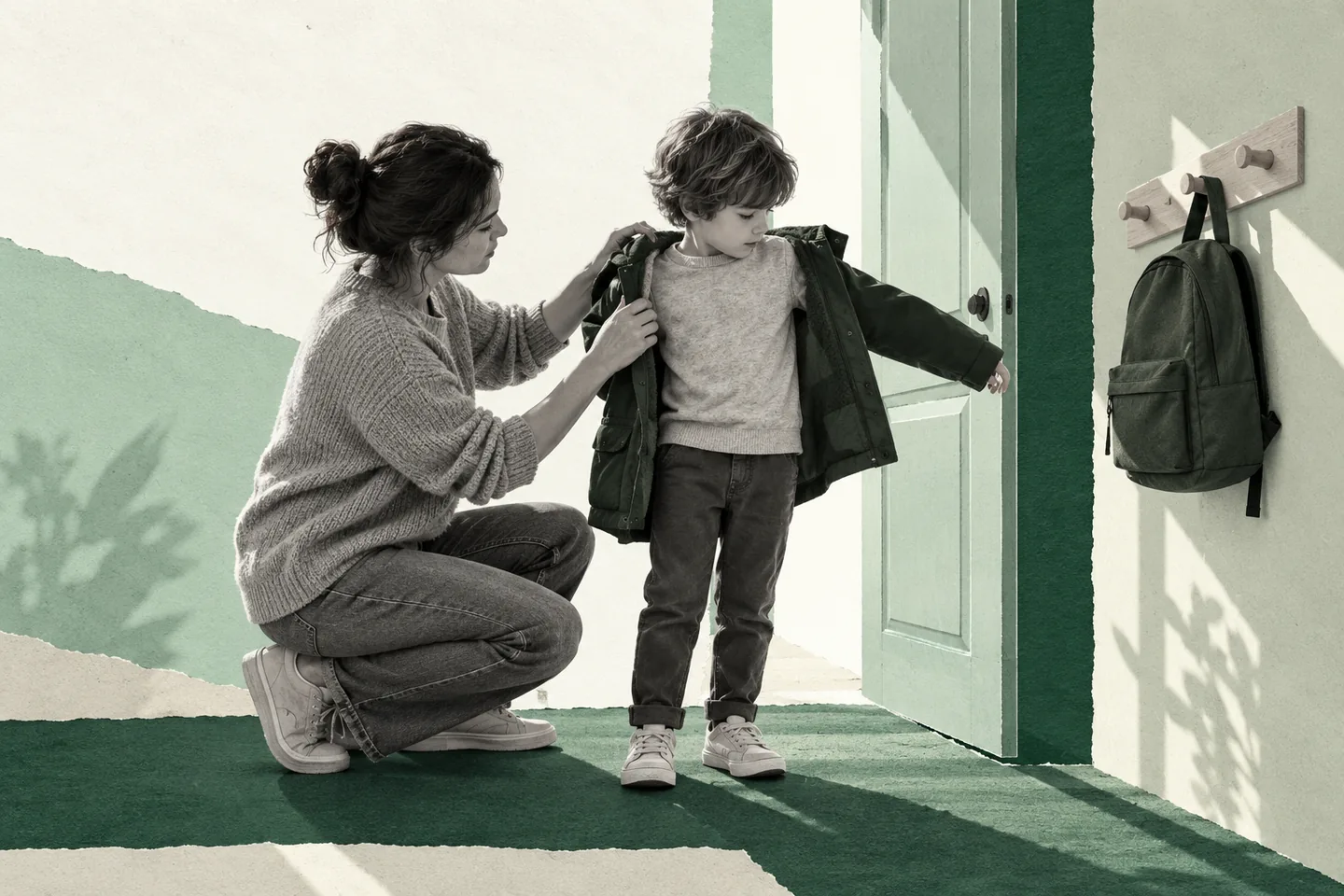
Morning Routine for Kids and Parents: Out the Door Calmly
A family morning routine that works: prepare the night before, a picture checklist for kids, a fixed order, buffer time and ten minutes for you.
Lost shoes, a forgotten permission slip, a child who won’t put on socks, and you’re already late. Family mornings can feel like a daily crisis.
A good morning routine for kids and parents won’t make mornings perfect, but it can make them predictable: fewer decisions, fewer arguments, and more chance of getting out of the door on time. This guide is part of our daily routine guides.
Why mornings are hard with kids
- Many people, one deadline. Everyone has to be ready at the same time.
- Children’s time sense is still developing. “Five minutes” means little to a six-year-old.
- Decisions pile up: what to wear, what to eat, what to bring.
- Parents start already rushed, often without a moment to themselves.
Step 1: Move work to the night before
Most morning stress comes from tasks that could have been done the evening before:
- Clothes out for everyone, including shoes and coats.
- Bags packed and by the door: homework, PE kit, water bottles, signed forms.
- Lunches made or prepared.
- Breakfast decided (and table set if you like).
- Keys, wallet, phone in one place.
A 15-minute “launch pad” routine after the kids’ bedtime pays off every morning.
Step 2: A fixed order, with a picture checklist
Children do better with the same steps in the same order. Make a simple checklist, with pictures for younger children:
- Toilet and wash face
- Get dressed
- Breakfast
- Brush teeth
- Shoes and coat
- Bag
Put it on the wall at their height. Instead of repeating instructions, ask: “What’s next on your list?”
Step 3: Make time visible
- A clock or visual timer in the kitchen.
- Checkpoints: “When the big hand is on the 6, we need to be dressed.”
- Music: a short morning playlist where each song is a step can help younger children.
Step 4: Give yourself 10 minutes first
If you can, wake up 10 to 15 minutes before the children. A coffee, a glass of water, a moment of quiet. A calmer parent makes for a calmer morning. If you’re considering much earlier mornings, see the 5am morning routine for the trade-offs.
Step 5: Build in buffer
Plan to be ready 10 minutes before you need to leave. Something will always come up: a spilled drink, a missing glove.
Step 6: Limit screens in the morning
For many families, screens before school make it harder to get moving. A simple rule: TV or tablets only once everyone is ready, if at all. Parents can try a phone-free morning too.
A sample family morning
| Time | Parent | Kids |
|---|---|---|
| 6:30 | Wake, coffee, 10 quiet minutes | Asleep |
| 6:45 | Wake kids | Toilet, wash face |
| 6:55 | Breakfast | Get dressed |
| 7:10 | Breakfast | |
| 7:30 | Tidy up | Brush teeth |
| 7:40 | Coats, bags | Shoes, coats |
| 7:50 | Leave (10 min buffer) |
When mornings still go wrong
Some mornings will still be chaotic. Afterwards, ask one question: “What could we move to the night before?” Change one thing at a time.
For parents’ own routines, see how to build a daily routine. For the evening side, see the evening routine.
Disclosure: Cohorty publishes this journal. Some parents book a 30-minute Cohorty session after school drop-off for their own focus time or a habit like exercise, alongside others with no camera or chat. See how to use Cohorty.
Common questions
How do I make mornings easier with kids?
Do as much as possible the night before, use the same order every morning with a picture checklist, make time visible and build in buffer time.
What time should kids wake up for school?
It depends on their bedtime and how much sleep they need. Children need more sleep than adults; work back from the time you need to leave and their bedtime.
How do I stop yelling in the morning?
Reduce decisions and rushing: prepare the night before, use a checklist and timer instead of repeated instructions, and leave buffer time.
Should kids watch TV before school?
Many families find mornings smoother without screens until everyone is ready. If you allow them, make it a reward for being ready, not a starting point.