Phone-Free Morning: How to Stop Checking Your Phone First
How to stop checking your phone first thing in the morning: a separate alarm, charging outside the bedroom, a replacement routine and a phone-free hour.
For many people, the phone is the first thing they see each morning. The alarm goes off, and before getting out of bed they’ve checked messages, news, email and two social apps. Twenty minutes later, the day has started on someone else’s agenda.
A phone-free morning means not using your phone for a set time after waking: 15 minutes, 30, or the first hour. This guide shows how to make it a habit, starting tomorrow. It’s part of our digital habits guides.
Why it’s worth trying
- You choose the first thing you focus on. Not an inbox, a news alert or a feed.
- Fewer time leaks. “Just checking” in bed easily turns into 20 or 30 minutes.
- Calmer starts. Many people find that morning news and messages raise stress before the day has begun.
- Better use of your best hours. Many people focus best early; a phone-free morning protects that time.
Research on morning phone use specifically is limited, so treat this as an experiment and notice how your mornings feel.
Step 1: Get the phone out of the bedroom
This is the single biggest change.
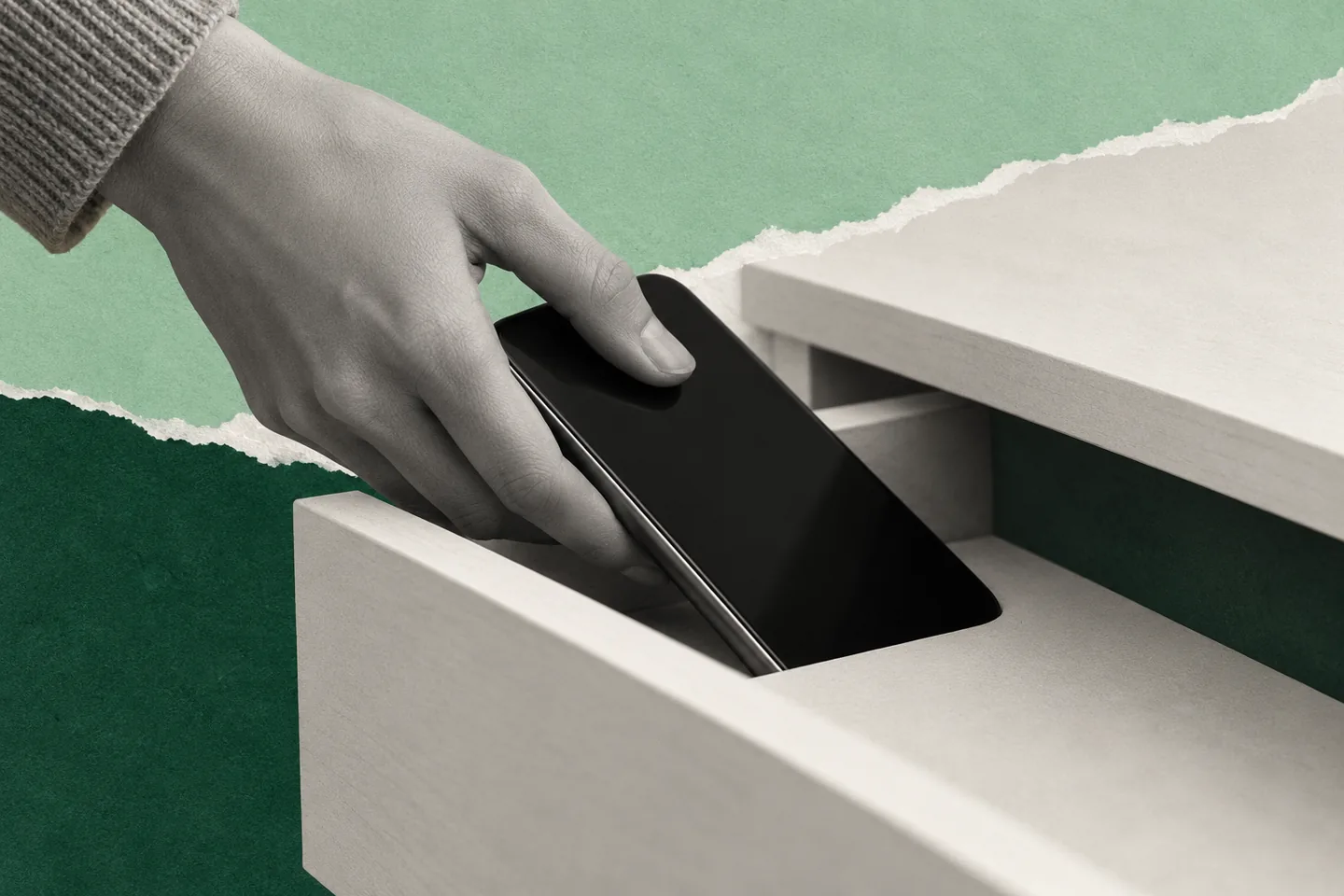
- Buy a simple alarm clock. If your phone is your alarm, it will always be in your hand first thing.
- Charge the phone outside the bedroom, in the kitchen or hallway.
- If it must stay, put it across the room, face down, on do-not-disturb until a set time.
See bedroom setup for better sleep for other changes that help both nights and mornings.
Step 2: Decide how long and what’s allowed
Start with something realistic:
| Level | Rule |
|---|---|
| Starter | No phone for the first 15 minutes |
| Standard | No phone until you’re dressed and have eaten |
| Full | No phone for the first hour |
Decide on exceptions in advance: an emergency call, a work shift that requires checking, a family member who may need you. Use do-not-disturb settings that let important contacts through.
Step 3: Replace the phone with a short routine
The urge to check often comes from habit and boredom. Give your mornings a few simple steps:
- Drink a glass of water.
- Open the curtains or step outside for daylight.
- Stretch or move for five minutes.
- Breakfast without a screen.
- Write today’s one important task.
Keep it short and in the same order every day so each step cues the next. See the minimal morning routine for more ideas.
Step 4: Make the first check deliberate
When the phone-free time ends, check with intent: messages first, then your calendar. Leave social media and news for later in the day if you can.
Step 5: Start the day’s work with a set time
The phone-free morning works best if it leads into something specific: the first block of focused work. Give it a time and, if possible, start it alongside others.
Disclosure: Cohorty publishes this journal. Some people book a morning 30-minute session in Cohorty to start the workday alongside others, with no camera or chat, so the first hour goes to their own priorities. See how to use Cohorty.
When you slip
You’ll grab the phone some mornings. Don’t make it a big deal. Notice what triggered it (a bad night, a stressful week, the phone left by the bed) and fix that one thing. Restart the next morning.
For the wider picture, see the 30-day digital detox, and for a full morning plan if you have ADHD, see the ADHD morning routine.
Common questions
Why shouldn’t I check my phone first thing in the morning?
It hands your first attention of the day to messages, news and feeds, can lead to long scrolling sessions, and may raise stress before the day starts.
How do I stop checking my phone in the morning?
Use a separate alarm clock, charge your phone outside the bedroom, set a phone-free time, and replace the habit with a short morning routine.
How long should a phone-free morning be?
Start with 15 to 30 minutes. If that’s easy, extend to an hour or until you start work.
What if I need my phone for work in the morning?
Use do-not-disturb with exceptions for important contacts, and delay non-essential apps like social media and news.