Digital Detox: A 30-Day Plan to Reduce Screen Time
A realistic digital detox: audit your screen time, cut notifications, set phone-free times and places, replace scrolling, and keep the changes after 30 days.
A digital detox usually conjures up a week in a cabin with no signal. That can be refreshing, but most people come back to exactly the same habits. A more useful detox changes how you use your devices day to day, so the benefits last.
This guide is a 30-day plan to reduce screen time without quitting technology: understand your use, cut what pulls you in, protect a few phone-free times and places, and replace scrolling with things you actually enjoy. It’s the starting point for our digital habits guides.
What the research says (briefly)
Research on screen time and wellbeing is mixed: total hours alone don’t tell the whole story, and effects vary by person and by what you’re doing on screen. But some experiments have found that cutting back on social media for a few weeks can improve measures like mood and loneliness, and many people report sleeping better when phones stay out of the bedroom.
The practical takeaway: you don’t need to fear technology, but it’s worth taking back control of when and how you use it.
Week 1: Notice
Before changing anything, find out what’s happening.
- Check your screen time report (built into most phones): total time, most-used apps, pickups and notifications.
- Note your triggers for a few days: waking up, boredom, a hard task, stress, being in bed.
- Pick your top two problems. For most people it’s one or two apps and one or two times of day.
Week 2: Reduce the pull
Cut the things that pull you back to your phone.
- Turn off non-essential notifications. Keep calls, messages from people and calendar. Everything else can wait until you check.
- Move tempting apps off the home screen, or delete them and use the browser version.
- Log out of social media after each use.
- Try grayscale mode to make the screen less appealing.
These small barriers are habit friction, and they work better than willpower.
Week 3: Phone-free times and places
Choose a few times and places where the phone doesn’t go.
| Time or place | Rule |
|---|---|
| First 30–60 minutes of the day | No phone until you’re up and ready. See phone-free mornings |
| Meals | Phones away from the table |
| Focus blocks | Phone in another room |
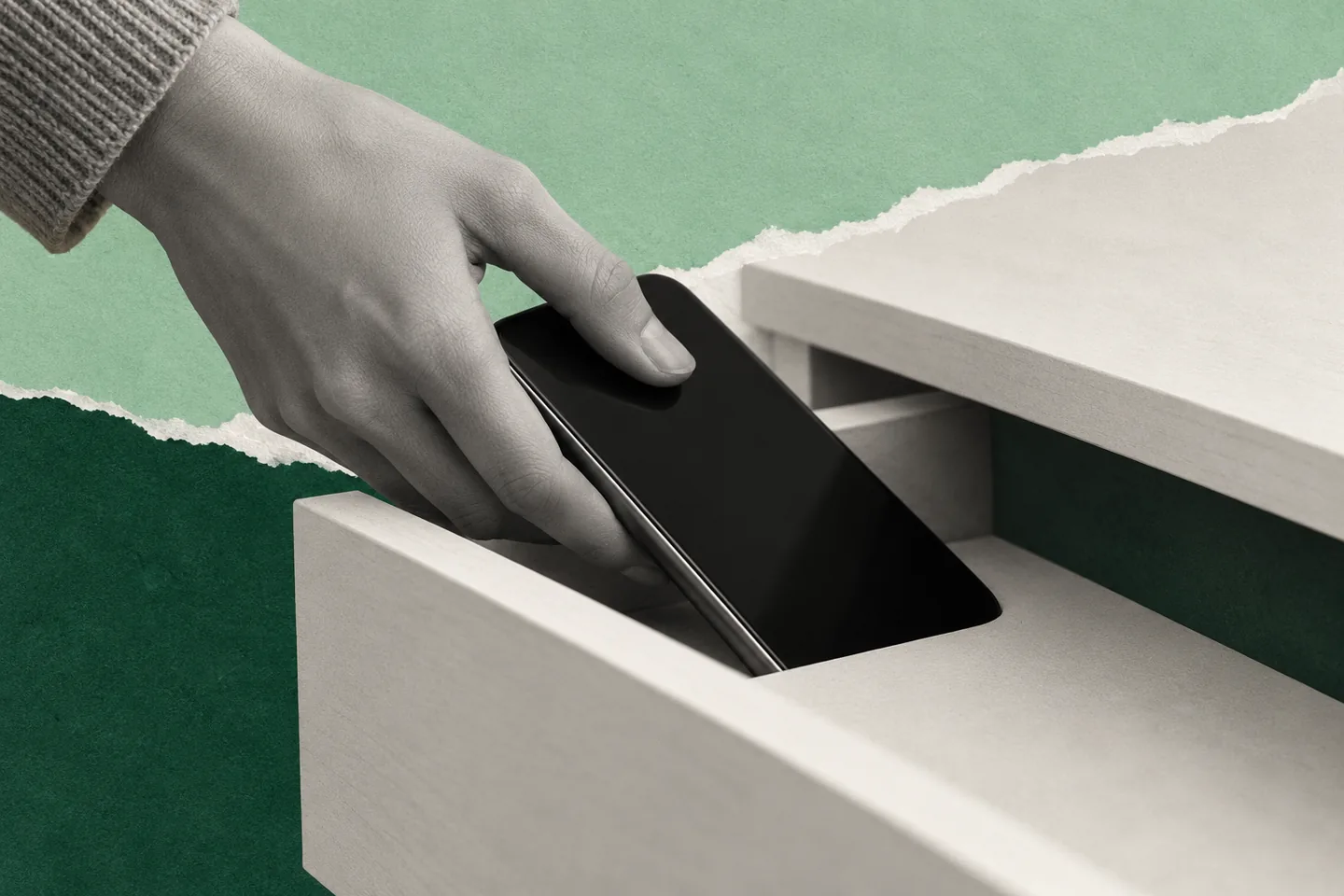
| Bedroom | Phone charges elsewhere; use an alarm clock |
| Last hour before bed | Screens off. See no scrolling after 8 PM |
Start with one or two. Add more once they’re easy.
Week 4: Replace and protect
Scrolling fills needs: rest, distraction, connection. Replace it with something that meets the same need.
- Rest: a short walk, music, a nap.
- Distraction: a book, a podcast, a puzzle.
- Connection: a call or a message to one person instead of scrolling a feed.
- Focus: a set time to work alongside others, phone away.
Disclosure: Cohorty publishes this journal. In Cohorty you book a 30-minute session, put the phone away and do one task alongside others, with no camera or chat. It’s a simple way to protect phone-free focus time. See how to use Cohorty.
After 30 days: keep what worked
Review your screen time report again and ask:
- Which change made the biggest difference?
- Which rule felt easy? Keep it.
- Which rule felt impossible? Make it smaller, don’t drop it.
Then keep two or three rules as permanent habits. A short monthly check of your screen time keeps you honest.
Optional: a digital sabbath
Our digital sabbath guide covers lengths, rules and what to do instead.
Some people add one longer break, like a weekly half-day or day without non-essential screens. If you try it, plan what you’ll do instead and tell people how to reach you if needed.
Common questions
What is a digital detox?
A period of deliberately reducing or pausing screen use, especially social media and non-essential apps, to change habits and improve wellbeing.
How do I reduce my screen time?
Turn off non-essential notifications, add friction to tempting apps, set phone-free times and places, and replace scrolling with activities you enjoy.
How long should a digital detox be?
Even a few weeks of changes can make a difference. A 30-day plan gives you time to change habits rather than just take a break.
Does a digital detox really work?
Research is mixed on total screen time, but cutting back on social media and keeping phones out of the bedroom has helped many people with mood and sleep. Lasting change comes from habits, not a one-off break. For a step-by-step plan for scrolling, see how to stop scrolling.