Digital Sabbath: How to Take a Day Off Screens
What a digital sabbath is, how to plan one (length, rules, exceptions), what to do instead of screens, and how to make a weekly tech-free day or half-day stick.
A digital sabbath is a regular break from screens: a day, an afternoon or an evening each week when phones, laptops and TVs stay off. The name borrows from the religious tradition of a weekly day of rest, but the practice is for anyone who wants a pause from constant connection.
This guide covers how to plan one, what to do instead, and how to make it a weekly habit rather than a one-off. It’s part of our digital habits guides.
Why try a digital sabbath?
- Rest from constant input. Notifications, news and feeds rarely stop on their own.
- Time back. Many people are surprised how long a day feels without screens.
- Attention for people and activities you enjoy but rarely get to.
- A reset that makes weekday screen habits easier to notice.
Research on screen time is mixed, and a weekly break isn’t a cure for everything. But a planned pause is a simple way to see how your devices affect you.
Step 1: Choose the length
| Option | When |
|---|---|
| One evening a week | Good first step |
| Half a day (e.g. Saturday morning) | Easier to fit around commitments |
| Sunset to sunset | The traditional sabbath shape |
| A full day | Once shorter versions feel easy |
Start shorter than you think. A successful evening beats an abandoned day.
Step 2: Set clear rules and exceptions
Decide in advance:
- What’s off: social media, news, email, streaming, games.
- What’s allowed: calls from family, maps for a trip, music, an e-reader without a browser, a camera.
- Emergencies: how people can reach you.
Tell people close to you, and set an away message if needed.
Step 3: Prepare the day before
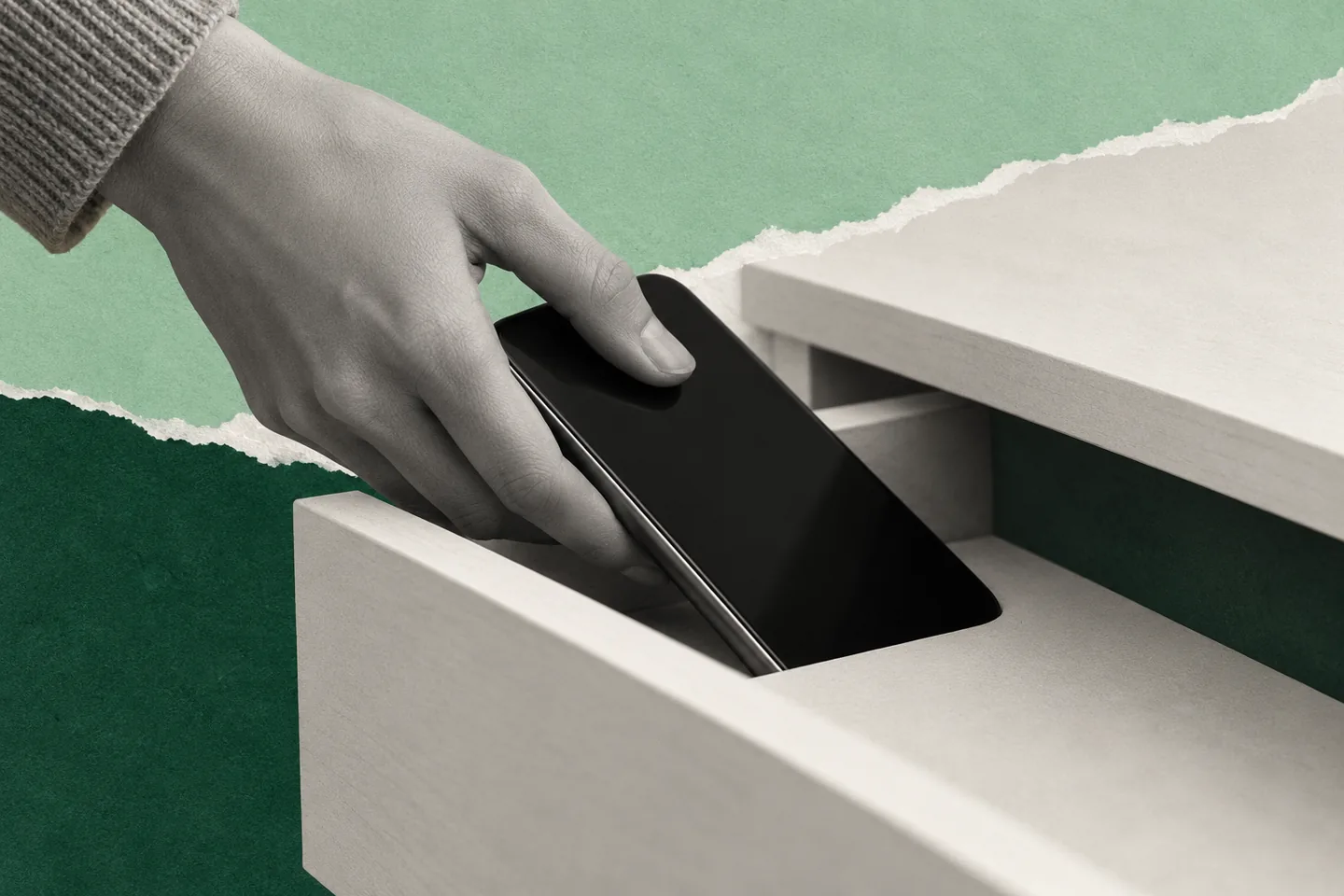
- Put the phone in a drawer or another room; switch on do-not-disturb with exceptions.
- Print or write down anything you’ll need (addresses, tickets).
- Plan a few activities, so you’re not just staring at the wall.
Step 4: Plan what to do instead
The day goes better with things to look forward to:
- Outside: a long walk, a hike, a bike ride, a park.
- With people: a meal, board games, a visit.
- Making things: cooking, baking, drawing, an instrument, a repair.
- Rest: a paper book, a nap, a bath.
See how to stop scrolling for ideas that replace specific scrolling triggers.
Step 5: Notice how it feels
The first few times may feel restless, and that’s normal. Afterwards, write down:
- What did you miss? What didn’t you miss at all?
- How did you sleep that night?
- What would make next week easier?
Make it a weekly habit
- Same time every week, in your calendar.
- A start ritual: phone into the drawer, a cup of tea, a walk.
- Do it with someone: partner, family or a friend who’s also unplugging.
- Keep the minimum on busy weeks: one screen-free evening still counts.
For daily habits that support the weekly break, see the 30-day digital detox and phone-free mornings.
Disclosure: Cohorty publishes this journal. Cohorty is a screen tool, so not for your sabbath itself. But on weekdays, a booked 30-minute session with your phone in another room can protect screen-free focus time alongside others. See how to use Cohorty.
Common questions
What is a digital sabbath?
A regular, planned break from screens and digital devices, such as one evening, half a day or a full day each week.
How long should a digital sabbath be?
Start with an evening or half a day. Extend to a full day once shorter breaks feel easy.
What can I do during a digital sabbath?
Go outside, see people, cook, read a paper book, make things, rest, or try a hobby you rarely have time for.
What if I need my phone for emergencies?
Set do-not-disturb with exceptions for family or important contacts, or check messages once at a set time.