Walking Habit: How to Walk More Every Day
How to build a daily walking habit: start with a short walk, attach it to your day, find more steps, and what research says about 10,000 steps.
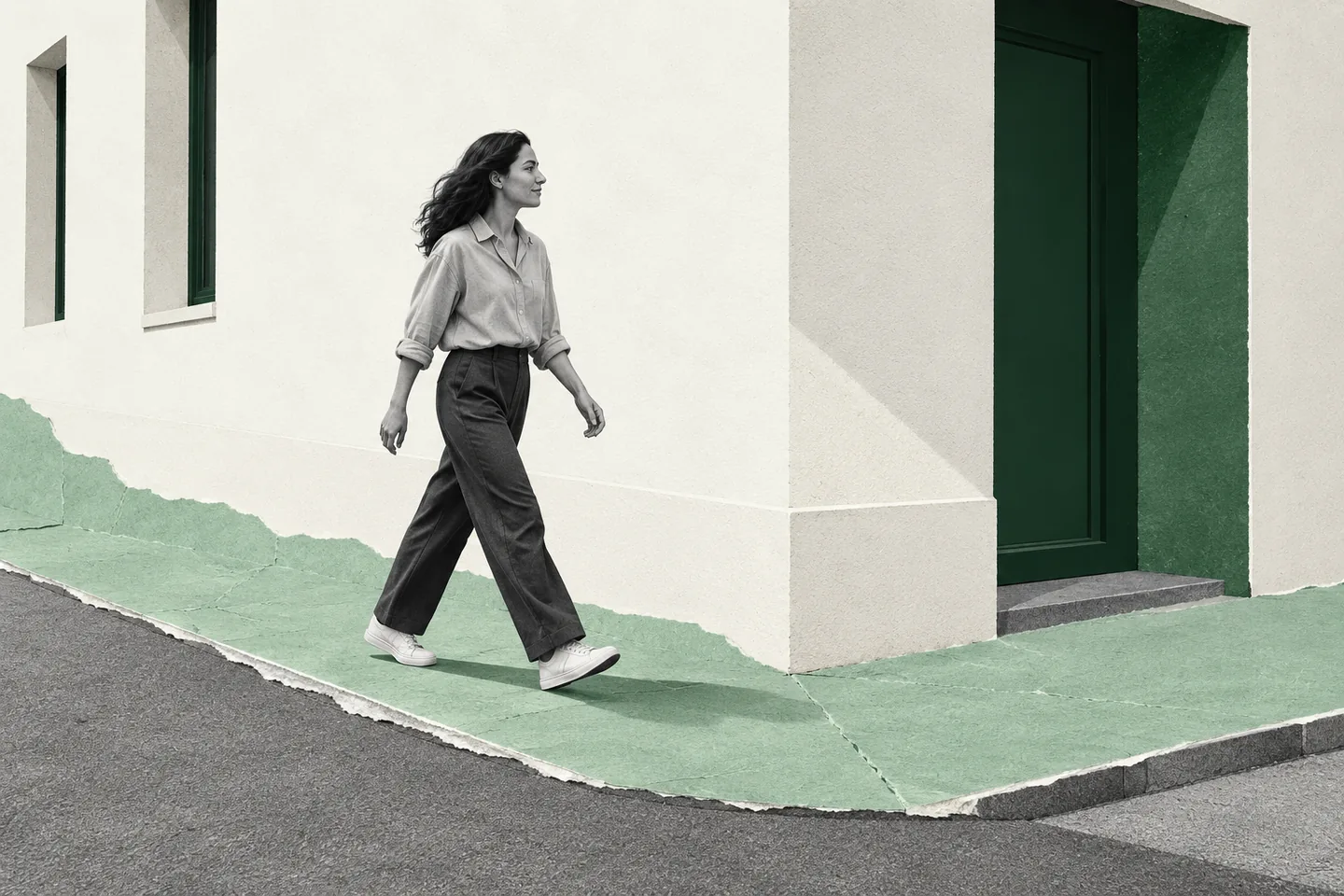
Walking is the easiest exercise habit to start. It needs no equipment, no gym and no special skill, and it fits into almost any day. The challenge is turning occasional walks into a daily walking habit.
This guide shows how to start small, find more steps in a normal day, and keep walking when the weather or your motivation turns. It’s part of our health habits guides.
Note: if you have a health condition or mobility limits, ask a doctor or physiotherapist what’s right for you.
How many steps do you need?
The famous 10,000 steps target didn’t come from research; it’s widely traced to a 1960s Japanese pedometer marketing campaign. Research since then suggests that more steps are associated with lower health risks, with benefits starting well below 10,000.
A large pooled analysis of step-count studies found that the risk of death kept falling as daily steps increased, levelling off at around 6,000 to 8,000 steps a day for adults over 60 and around 8,000 to 10,000 for younger adults.
The practical takeaway: more than you do now is good. Start from your current average and build up gradually.
Step 1: Find your starting point
Check your phone or watch for your average daily steps over the last week. That’s your baseline. Your first goal is to add 1,000 to 2,000 steps a day, which is roughly 10 to 20 minutes of walking.
Step 2: Attach walks to your day
The most reliable walks are tied to something that already happens:
- After lunch: a 10-minute walk around the block.
- After dinner: a short walk before settling in for the evening.
- Commute: get off one stop early, or park further away.
- Phone calls: walk during calls that don’t need a screen.
- Morning: a short walk with your coffee for daylight and a calm start.
Pick one to start. This is habit stacking for walking.
Step 3: Make it easy
- Comfortable shoes by the door.
- A jacket and umbrella ready.
- A podcast or audiobook you only listen to while walking (a form of temptation bundling).
- A few favorite routes of different lengths, so you don’t have to decide.
Step 4: Walk with others
Walking with someone makes it more enjoyable and harder to skip.
- A friend or partner on set days.
- A local walking group.
- Walking meetings at work.
- A call with a friend who’s also walking.
Disclosure: Cohorty publishes this journal. You can book a 30-minute Cohorty session for a walk (“Walk 3 km”) and check in alongside others doing their own habits, with no camera or chat. See how to use Cohorty.
Step 5: Increase gradually
Once a daily walk feels automatic, build up:
| Weeks | Daily walking |
|---|---|
| 1–2 | Your baseline plus 10 minutes |
| 3–4 | Plus 15–20 minutes, or one longer walk at the weekend |
| 5+ | Add brisk sections, hills or a second short walk |
Brisk walking (fast enough that talking takes a little effort) counts as moderate activity toward the 150 minutes a week recommended in many guidelines.
When the weather is bad
- Have a rain plan: an umbrella and waterproof jacket, or an indoor alternative.
- Walk in a shopping centre, a museum or around a large building.
- Do a short indoor routine on the worst days and count it.
Keep it going
- Track days walked, not just steps.
- Expect off days; aim to never miss two in a row.
- Make it social or scenic to keep it interesting.
For the bigger picture, see how to make exercise a habit. If you want a running goal, the couch to 5K plan builds from walking.
Common questions
Do I really need 10,000 steps a day?
No. 10,000 is a round number from marketing, not a medical threshold. Research suggests benefits rise with more steps and level off somewhere between 6,000 and 10,000 for many people.
Is walking enough exercise?
Brisk walking counts as moderate activity. Guidelines also recommend muscle-strengthening activities on two or more days a week.
What’s the best time to walk?
Whenever you’ll do it regularly. Walking after meals is easy to attach to a routine.
How do I make walking a habit?
Attach a short walk to something you do daily, keep shoes and a jacket ready, walk with others when possible and increase gradually.