Yoga for Beginners at Home: A 15-Minute Daily Habit
Start yoga at home as a beginner: a 15-minute routine of basic poses, what you need, how often to practice, staying safe, and how to make daily yoga a habit.
You don’t need a studio, an expensive mat or an hour a day to start yoga. A short practice at home, done most days, is a good way to build strength, flexibility and a few calm minutes into your routine.
This guide gives a 15-minute yoga routine for beginners at home and shows how to turn it into a habit. It’s part of our health habits guides.
Note: if you’re pregnant, have high blood pressure, back problems or a recent injury, check with a doctor or a qualified yoga teacher before starting. Move gently and stop if anything hurts.
What you need
- A non-slip mat or a rug.
- Comfortable clothes.
- A cushion or folded blanket for support.
- A quiet corner with enough space to lie down with arms out.
A 15-minute beginner yoga routine
Move slowly and breathe through your nose if comfortable. Hold each pose for about five slow breaths unless noted.
| Pose | What it does | Time |
|---|---|---|
| Easy seated pose, breathing | Settles attention | 1 min |
| Cat-cow | Mobilizes the spine | 1 min |
| Downward-facing dog (knees bent is fine) | Stretches back and legs | 1 min |
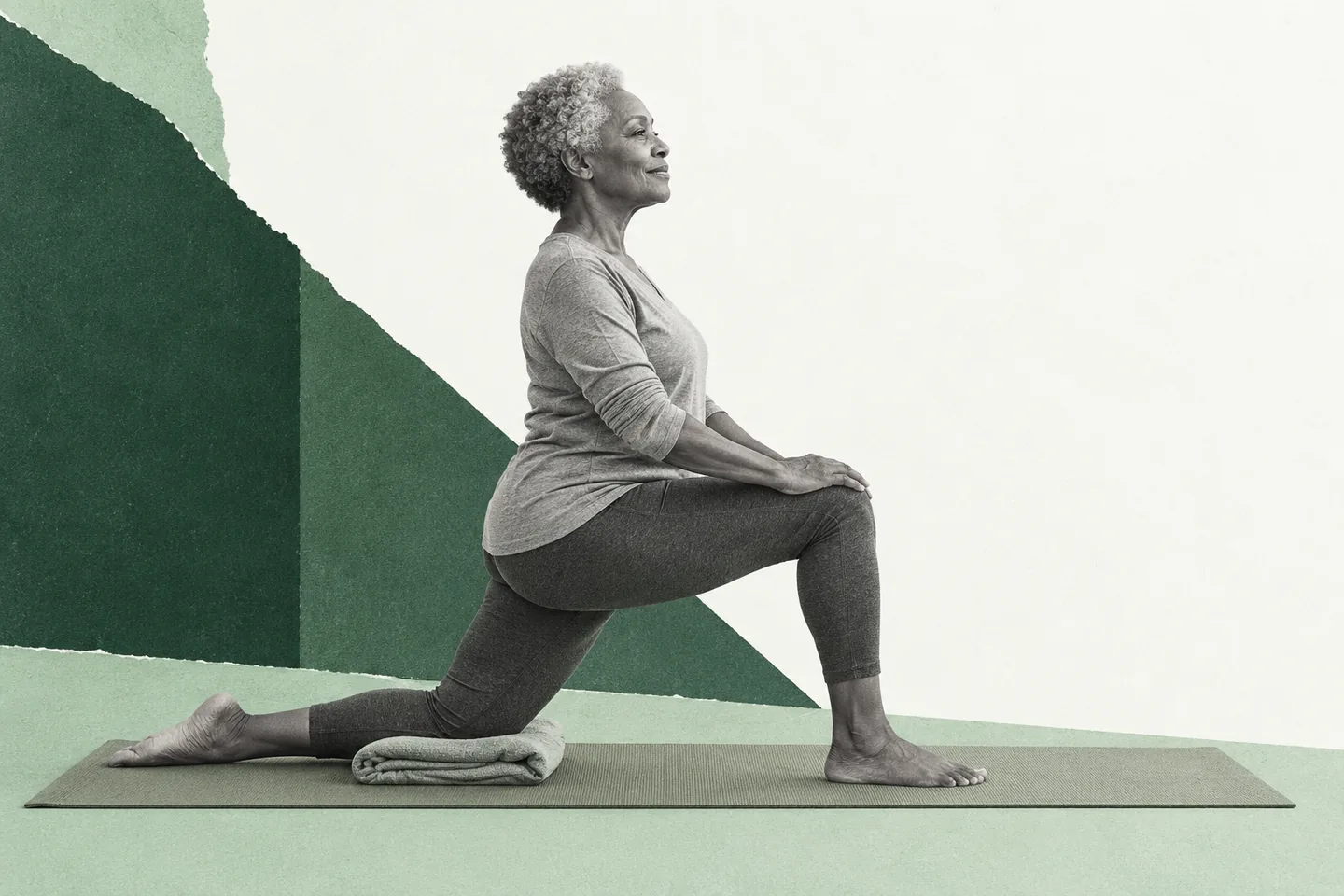
| Low lunge, each side | Opens hips | 1 min each |
| Mountain pose | Posture and balance | 30 s |
| Standing forward fold (knees soft) | Stretches back of legs | 1 min |
| Warrior II, each side | Leg strength | 1 min each |
| Tree pose, each side | Balance | 30 s each |
| Bridge pose | Back and glutes | 1 min |
| Supine twist, each side | Gentle spinal rotation | 30 s each |
| Child’s pose | Rest | 1 min |
| Lying relaxation | Calm finish | 2 min |
On busy days, do the first three poses and the last one. That counts.
How often to practice
Short, frequent practice is easier to keep than long, occasional sessions. A good beginner goal is 15 minutes on most days, with a longer class or video once a week if you enjoy it.
Staying safe
- Never force a pose. Use blocks, cushions or bent knees.
- Pain (sharp, pinching, joint pain) means stop or ease off.
- Beginners’ classes or a qualified teacher help with alignment.
- Videos for beginners are fine; choose ones that offer modifications.
Make yoga a daily habit
- Pick a time and cue: after waking and a glass of water, after work, or before bed as part of an evening wind-down.
- Leave the mat out. If it’s rolled away, you’ll skip it more often.
- Start with five minutes. Add poses once the habit is steady.
- Track days practiced, not how deep your poses are.
- Practice with others: a class, a friend on a call, or a shared session.
Disclosure: Cohorty publishes this journal. You can book a 30-minute Cohorty session for yoga (“20-minute yoga flow”) and practice alongside others doing their own habits, with no camera or chat. See how to use Cohorty.
Yoga, stretching or meditation?
They overlap. If you mainly want flexibility, a daily stretching routine may be enough. If you mainly want calm, try a meditation habit. Yoga combines movement, strength, flexibility and breathing.
Common questions
Can I learn yoga at home as a beginner?
Yes. Start with simple poses and beginner videos that offer modifications. A few classes with a teacher can help with alignment.
Is 15 minutes of yoga a day enough?
For beginners, yes. Regular short sessions build flexibility and strength over time and are easier to keep than long sessions.
What is the best time to do yoga?
Whenever you’ll do it consistently. Mornings help some people feel energized; evenings help others wind down.
How long until I see results from yoga?
Many people notice small improvements in flexibility and feeling calmer within a few weeks of regular practice.