Dopamine Detox: What It Is, What It Isn’t, and How to Do It
Does a dopamine detox work? What science says (you can't reset dopamine), the useful idea behind it, and a practical version for phone habits.
The idea sounds appealing: stop all pleasurable stimulation for a day, “reset” your dopamine, and come back enjoying simple things again. Dopamine detox videos promise better focus, more motivation and less craving for your phone.
The reality is more interesting, and more useful. You can’t actually detox from dopamine. But the habit-change idea behind the trend, cutting back on the triggers for compulsive behaviors, is sound. This guide separates the myth from the useful part and gives a practical version. It’s part of our digital habits guides.
Note: this is general information. If you’re struggling with compulsive behavior, gambling, substance use or low mood, please talk to a doctor or mental health professional.
What dopamine actually does
Dopamine is a chemical messenger in the brain. Among many other roles, it’s involved in motivation, learning and anticipating rewards. It’s not a “pleasure chemical” that runs out, and your brain needs it to function. Avoiding pleasure for a day doesn’t lower your dopamine levels in any meaningful, lasting way.
So the literal claim, that you can “reset” or “detox” dopamine by avoiding fun, isn’t supported by science. See dopamine’s role in habit formation for more on how it relates to habits.
The useful idea behind it
The term “dopamine fasting” was popularized by a psychologist who described it not as a chemical reset but as a way of applying behavior therapy: reducing exposure to triggers for impulsive behaviors, for set periods, so they lose their grip. That’s a well-established idea in habit change, often called stimulus control.
In plain terms: if you constantly check your phone, every notification and every glance at the home screen is a cue. Reduce the cues, and the urge weakens.
A practical “dopamine detox”
Instead of a day of staring at a wall, target the specific behaviors you want to change.
1. Pick one or two compulsive habits
Examples: checking social media, short-video scrolling, refreshing email, online shopping, snacking while bored. Choose the ones that cost you the most time or peace of mind.
2. Set a time-limited break
Choose a fixed window to avoid them:
- One evening a week without the app.
- The first hour of every day without the phone. See phone-free mornings.
- A weekend without short-video apps.
3. Remove the triggers
- Delete the app or log out.
- Turn off notifications.
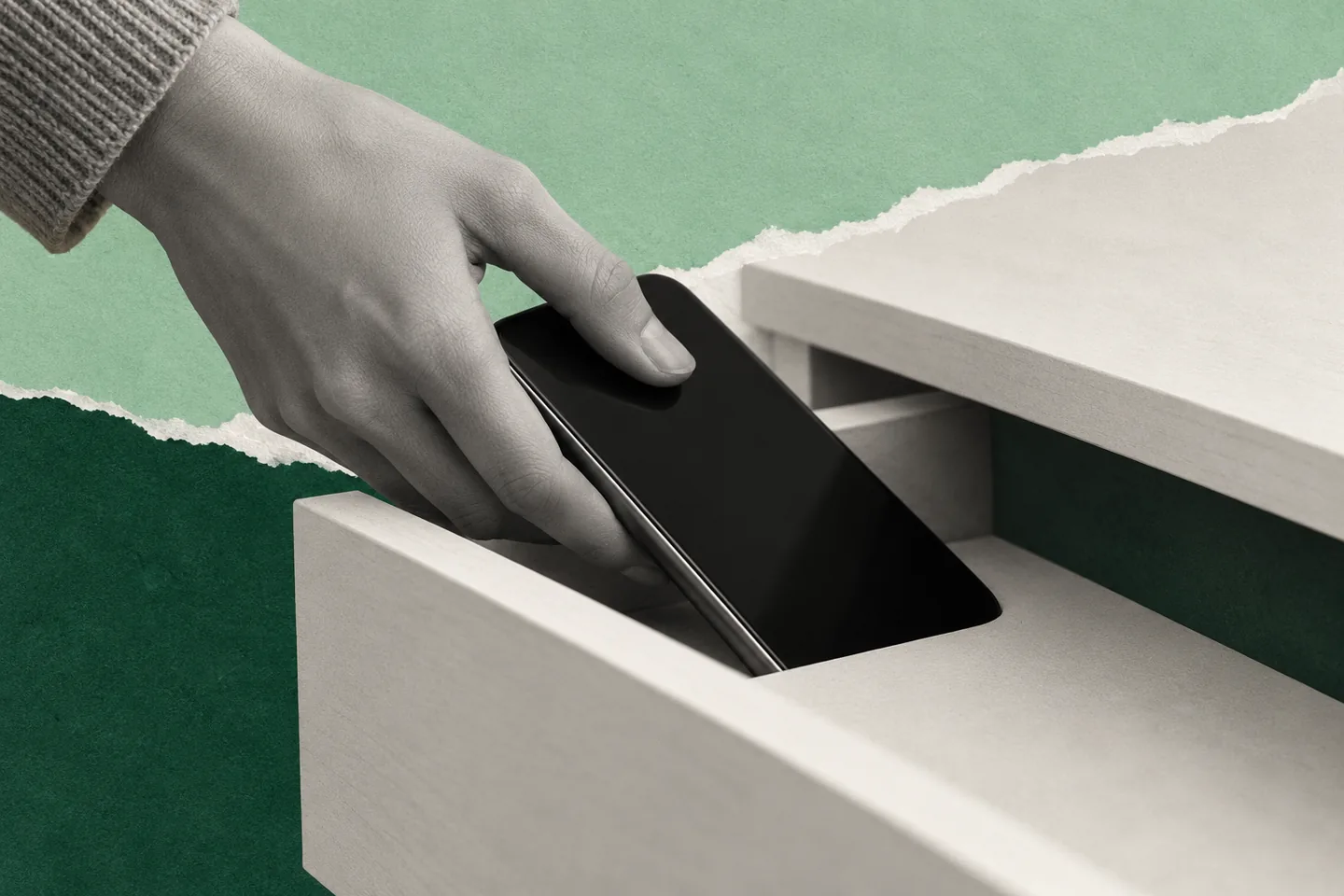
- Leave the phone in another room.
This is the same principle as habit friction.
4. Fill the time on purpose
Boredom is the hardest part. Plan what you’ll do instead: a walk, a book, cooking, a call with a friend, a hobby. Low-stimulation activities often become more enjoyable once you’re not constantly comparing them with a feed.
5. Notice the urge, don’t obey it
When the urge comes, notice it: “I want to check my phone.” Wait a few minutes. Urges often rise and fall like a wave.
6. Reintroduce deliberately
After the break, decide how you want to use the app: specific times, a time limit, on a computer only. That’s the real goal: choosing rather than reacting.
Signs it’s helping
- You pick up your phone less without thinking.
- Boredom feels less urgent.
- Focus on one task is a little easier.
- You enjoy slower activities more.
Doing focused work without the phone
One of the best uses of a break from your phone is protected focus time. Starting is easier when others are doing the same.
Disclosure: Cohorty publishes this journal. In Cohorty you book a 30-minute session, put the phone away and work on one task alongside others, with no camera or chat. See how Cohorty sessions work.
For a broader plan, see the 30-day digital detox.
Common questions
Does a dopamine detox really work?
Not in the sense of resetting dopamine levels. But taking time-limited breaks from specific compulsive behaviors and removing their triggers can help you change those habits.
How long should a dopamine detox last?
There’s no required length. Short, regular breaks from specific apps or behaviors, like the first hour of each day or one evening a week, are easier to keep than a full day of avoiding everything.
What can I do during a dopamine detox?
Low-stimulation activities you enjoy: walking, reading, cooking, talking with friends, exercising, hobbies. The goal is to avoid specific compulsive habits, not all enjoyment.
Is dopamine detox the same as a digital detox?
They overlap. A digital detox focuses on screens and devices. A “dopamine detox” usually targets any quick-reward habit, including snacking or shopping.