Home Gym Setup: What You Need and How to Use It
How to set up a home gym you'll use: the space, beginner equipment in three budgets, layout tips, safety basics and habits that keep you training.
A home gym removes the biggest obstacles to exercise: travel time, opening hours, crowds and feeling watched. But many home gyms end up as expensive clothes racks.
This guide covers home gym setup with habits in mind: a space that makes training easy to start, equipment that matches your goals and budget, and routines that keep you using it. It’s part of our health habits guides.
Note: if you’re new to strength training or have a health condition, consider a session or two with a qualified trainer to learn technique, and check with a doctor if needed.
Step 1: Choose the space
You don’t need a whole room. Look for:
- Enough floor to lie down with arms stretched and step forward into a lunge (roughly 2 × 2 metres).
- Headroom for overhead presses or jumping, if you’ll do them.
- A stable floor: rubber mats protect floors and reduce noise.
- Ventilation, a window or a fan.
A corner of a bedroom, garage or living room works if the equipment can stay set up.
Step 2: Equipment by budget
Start with what you’ll use most. Add more only when you’re training regularly.
| Budget | Equipment | Good for |
|---|---|---|
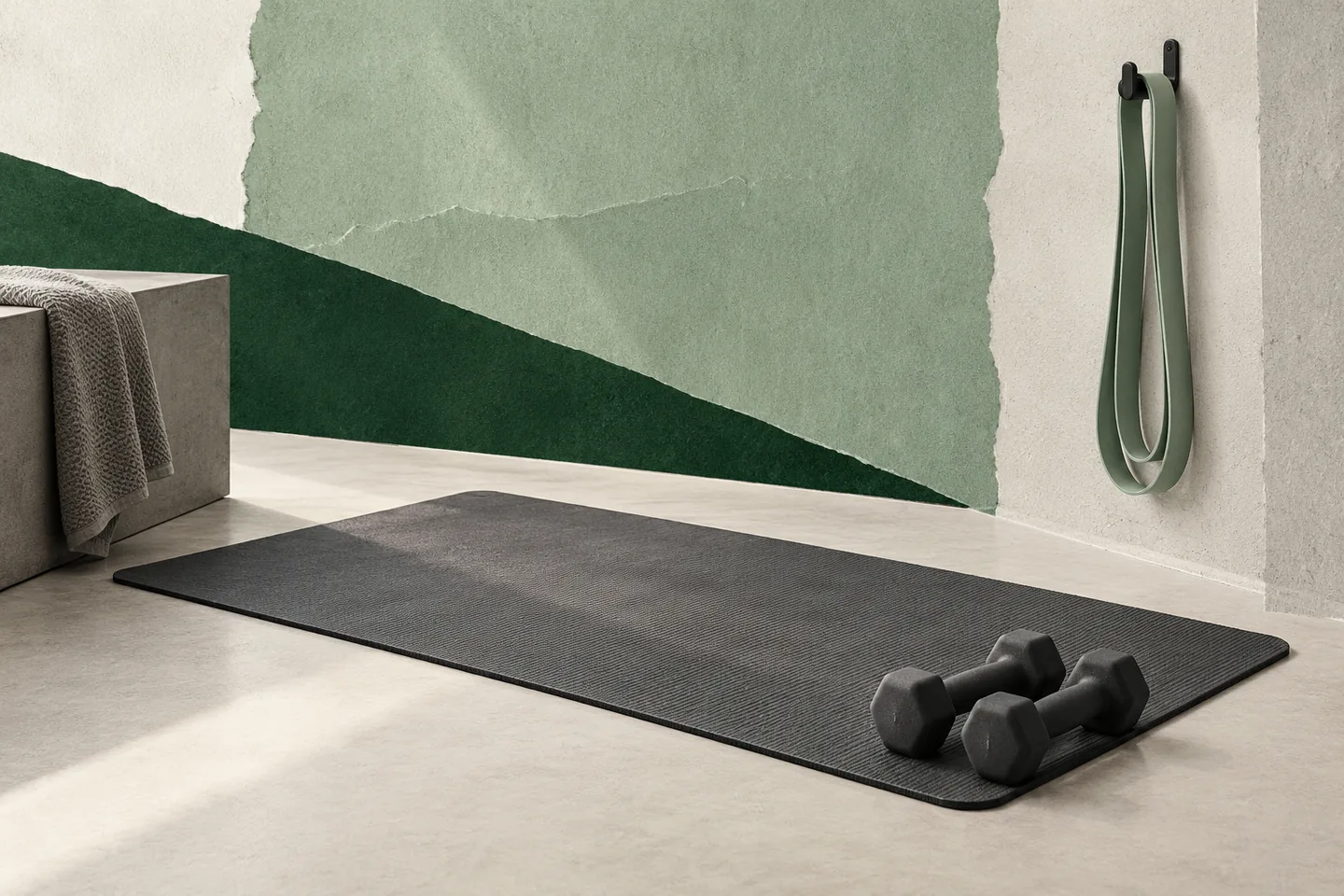
| Minimal | Exercise mat, resistance bands, a door-frame pull-up bar (check your frame) | Bodyweight training, mobility |
| Moderate | Adjustable dumbbells or a few kettlebells, a sturdy bench | Full-body strength |
| Larger | Squat rack, barbell and plates, rubber flooring | Heavier strength training |
A jump rope or an existing bike adds cardio. For many beginners, bodyweight plus bands or dumbbells covers a lot. See home workout habit for a no-equipment routine.
Step 3: Set up for easy starts
The best home gym is the one with the least friction:
- Equipment out and visible, not packed away in boxes.
- Clothes and shoes nearby.
- A written plan on the wall: today’s workout, so you don’t have to decide.
- A speaker or headphones ready.
These are habit friction principles: every step removed makes training more likely.
Step 4: Safety basics
- Learn technique with light weights first.
- Use collars on barbells; check bands and bars for wear.
- Keep children and pets clear of equipment.
- Don’t train to failure on heavy lifts without safety arms or a spotter.
Step 5: Build the habit
Equipment doesn’t create a habit. Structure does:
- Fixed days and times, in your calendar.
- A simple program, for example three full-body sessions a week.
- A minimum version for busy days (15 minutes).
- A log of what you lifted, so you can see progress.
See how to make exercise a habit.
The downside of training at home: no one else is there
A gym gives you other people, which helps many people start. At home, you can add company in other ways:
- Train at the same time as a friend and send a “done” message.
- Join a live class online.
- Book a shared session where others are working out too.
Disclosure: Cohorty publishes this journal. In Cohorty you can book a 30-minute session for a home workout (“Kettlebell swings, 5 sets”) and do it alongside others with no camera or chat, so your home gym has a start time and company. See how to use Cohorty.
Common questions
What do I need for a basic home gym?
A mat, resistance bands and a pair of adjustable dumbbells or a kettlebell cover most beginner full-body training.
How much space do I need for a home gym?
Roughly 2 × 2 metres is enough for bodyweight, band and dumbbell training. A rack and barbell need more floor and ceiling height.
Is a home gym worth it?
It is if you use it. Start with inexpensive equipment, train consistently for a few months, then add more.
How do I stay motivated to work out at home?
Fix days and times, keep equipment out and visible, follow a simple plan and add company through a friend, a class or a shared session.