Night Routine for Anxiety: Calm a Racing Mind Before Bed
A night routine for anxiety: a worry dump, a screen cutoff, a wind-down sequence and what to do if you can't sleep. Quiet a racing mind at bedtime.
The day is over, the lights are off, and your mind decides now is the time to review every worry you have. Tomorrow’s meeting, an awkward message, money, health, something you said in 2014.
A night routine for anxiety won’t make worries disappear, but it can give your mind a signal that the day is over, move worries out of your head and onto paper, and make the hour before bed calmer. This guide walks through one you can start tonight. It’s part of our sleep and evening routine guides.
Note: this is general information, not medical advice. If anxiety or insomnia is frequent or severe, talk to a doctor. Cognitive behavioral therapy for insomnia (CBT-I) is a well-established treatment, and anxiety is very treatable.
Why anxiety gets louder at night
Caffeine late in the day can also make it harder to settle; see how to cut back on caffeine.
- Fewer distractions. During the day, tasks and people fill your attention. At night, there’s room for worry.
- Tiredness. A tired brain is worse at putting thoughts in perspective.
- Trying to sleep. The harder you try to fall asleep, the more alert you can become, and lying awake worrying about not sleeping adds a new worry.
- Screens and news. Late-night scrolling often brings exactly the content that feeds anxiety.
A 45-minute night routine for anxiety
You don’t need every step. Start with two or three and keep them in the same order every night.
1. Worry dump (10 minutes, earlier in the evening)
Some time before bed, write down everything on your mind: worries, tasks, half-thoughts. For each worry, add one line: “Next step:” or “Nothing to do tonight.”
This is sometimes called scheduled worry time. Its aim is to give worries a time and place that isn’t bedtime. If a worry shows up later, you can tell yourself, “It’s on the list.”
2. Tomorrow’s plan (5 minutes)
Write the first task for tomorrow and when you’ll do it. Unfinished tasks are a common source of bedtime rumination; a plan tells your brain it doesn’t need to keep reminding you.
3. Screen cutoff (60 minutes before bed)
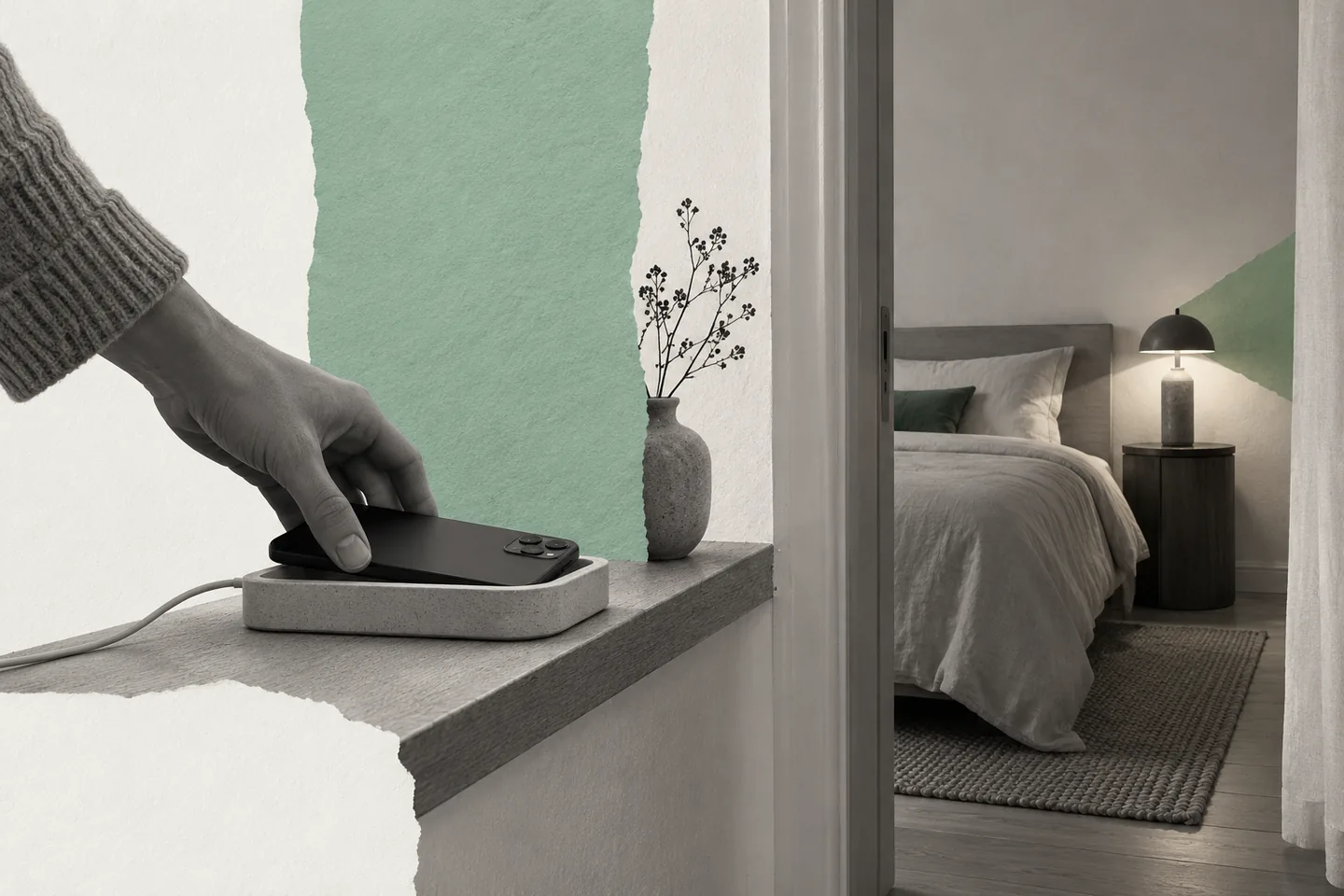
Set a time when phones and laptops go away, ideally outside the bedroom. If that’s too much, start with no news and no social media in the last hour. See no scrolling after 8 PM for a simple version.
4. Lower the lights and temperature
Dim lights in the last hour and keep the bedroom cool, dark and quiet. Our guide to setting up your bedroom for better sleep covers this in detail.
5. A calming activity (15–20 minutes)
Choose something low-effort that you enjoy:
- Reading a paper book (fiction often works better than work-related reading).
- A warm shower or bath.
- Gentle stretching.
- Quiet music or an audiobook.
6. A short relaxation exercise (5 minutes)
- Slow breathing: breathe in for about 4 seconds and out for about 6, for a few minutes. Longer out-breaths tend to feel calming.
- Progressive muscle relaxation: tense each muscle group for a few seconds, then release, from feet to face.
- Body scan: move attention slowly through the body. See how to build a meditation habit.
7. Bed only when sleepy
Go to bed when you feel sleepy, not just because it’s a certain time. Keeping the bed for sleep helps your brain link it with sleeping rather than worrying.
If you can’t sleep
Naming the feeling and a few slow breaths are two of the simplest emotional regulation skills to use here.
- If you’ve been awake a long time (roughly 20 minutes or more) and feel frustrated, get up, go to another dim room and do something quiet until you feel sleepy. Then return to bed. This is a standard part of CBT-I.
- Don’t check the time. Clock-watching adds pressure.
- Write the worry down if it keeps looping, then put the paper away.
- Keep the same wake-up time the next day, even after a bad night. It helps reset your sleep rhythm.
Make the routine a habit
A routine works best when it’s consistent. Keep the same order every night so each step cues the next: worry dump after dinner, screens off at 9:30, shower, book, breathing, bed. That’s habit stacking applied to evenings.
If you struggle to start the routine itself, give it a fixed time.
Disclosure: Cohorty publishes this journal. Some people book a 30-minute evening session in Cohorty for a screen-free wind-down (reading, journaling or stretching) alongside others doing the same, with no camera or chat. See how to use Cohorty.
Sample night routine for anxiety
| Time | Step |
|---|---|
| 19:30 | Worry dump and tomorrow’s first task |
| 21:30 | Screens away, lights low |
| 21:35 | Warm shower |
| 21:50 | Read a paper book |
| 22:15 | Five minutes of slow breathing |
| 22:20 | Bed when sleepy |
Common questions
How do I stop anxious thoughts at night?
Move worries out of your head earlier in the evening with a written worry dump, cut screens and news before bed, and use a short relaxation exercise. If you can’t sleep, get up for a while rather than lying awake.
What should a night routine for anxiety include?
A worry dump, a plan for tomorrow, a screen cutoff, dim lights, a calming activity and a short breathing or relaxation exercise, in the same order each night.
Why is my anxiety worse at night?
There are fewer distractions, you’re tired, and trying to sleep can increase alertness. Screens and news before bed can also add to it.
When should I see a doctor about sleep anxiety?
If anxiety or poor sleep happens most nights for several weeks, affects your day, or comes with low mood or panic attacks, talk to a doctor.