How to Improve Posture: Desk Setup and Movement Habits
How to improve posture without forcing yourself to sit straight: a better desk setup, movement breaks, a few exercises and what research says.
“Sit up straight” is advice almost everyone has heard. But the picture of one perfect posture held all day isn’t what research suggests matters most. For many people, variety of movement and a comfortable setup matter more than a single “correct” position.
This guide covers how to improve posture in practice: a desk setup that makes good positions easy, regular movement, a few exercises, and realistic expectations. It’s part of our health habits guides.
Note: if you have persistent pain, numbness, tingling or pain after an injury, see a doctor or physiotherapist. This is general information, not a diagnosis.
What research says about posture
Studies have struggled to find a strong, consistent link between specific sitting or standing postures and back pain. Many physiotherapists now emphasize that the body likes change: staying in any position for a long time, even a “good” one, can feel uncomfortable. Moving often and building strength tend to matter more than holding a perfect position.
That’s good news: you don’t need to be rigid. You need a decent setup and regular movement.
Step 1: Set up your desk
A good setup makes comfortable positions the default:
- Screen at about eye level and roughly an arm’s length away. Laptops: use a stand with a separate keyboard and mouse.
- Chair supporting your lower back; feet flat on the floor or a footrest.
- Keyboard and mouse close, so your elbows stay near your sides.
- Light from the side to avoid glare and leaning in.
See workspace setup for productivity for the full checklist.
Step 2: Move every 30 to 60 minutes
For more break ideas and what research says, see micro-breaks.
The simplest posture habit: change position often.
- Stand up and walk for a minute or two.
- Roll your shoulders and stretch your neck.
- Alternate sitting and standing if you have a sit-stand desk.
- Take calls standing or walking.
Attach it to a cue: end of a focus block, a meeting, a refill of your water bottle. Working in timed blocks makes this natural; see the Pomodoro guide.
Step 3: A few strengthening and mobility exercises
A few minutes, a few times a week:
| Exercise | What it helps | How |
|---|---|---|
| Chin tucks | Neck | Gently draw the chin back, hold 5 s, repeat 10 times |
| Wall angels | Upper back, shoulders | Back to a wall, slide arms up and down |
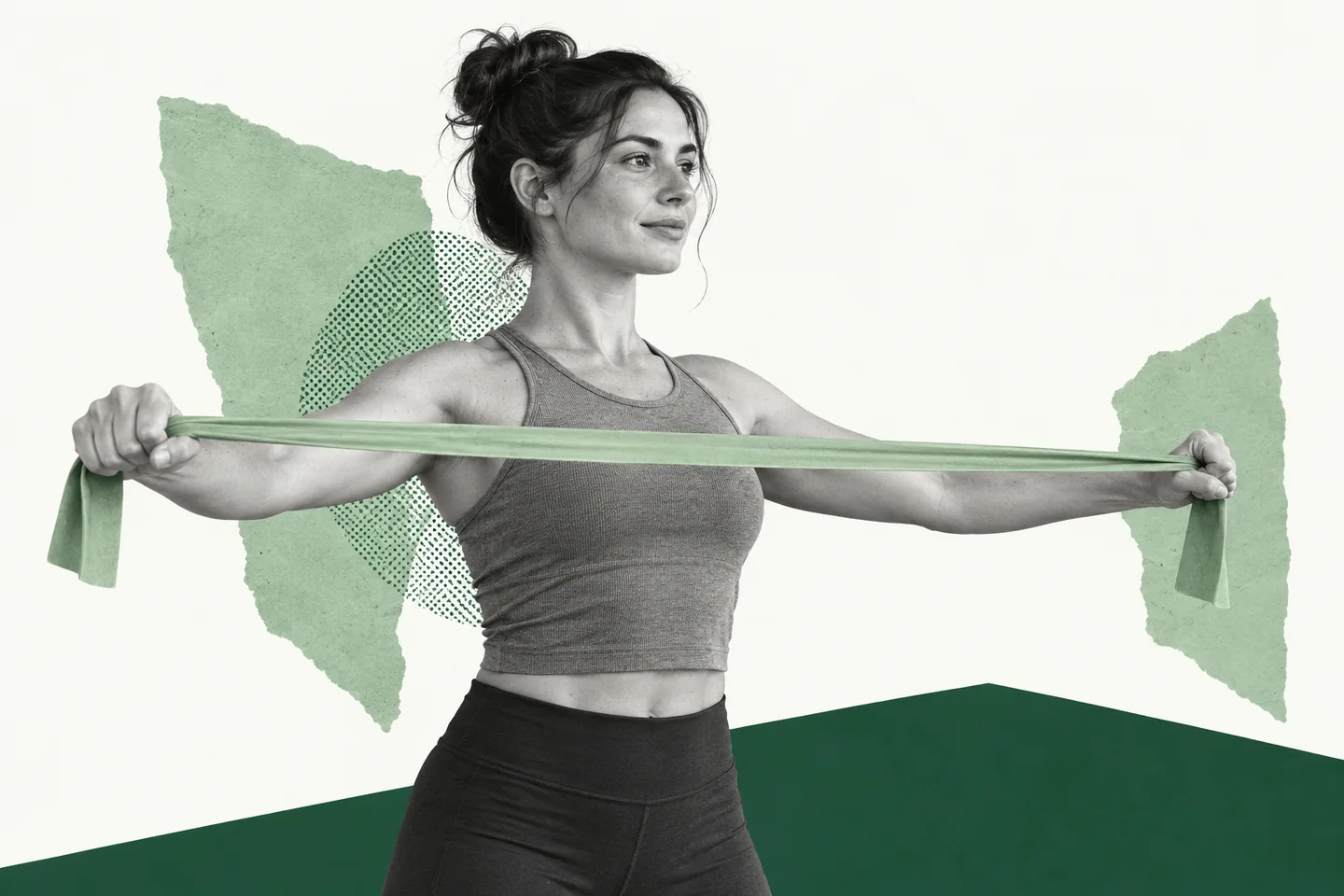
| Band pull-aparts | Upper back | Pull a resistance band apart at chest height, 15 reps |
| Glute bridges | Hips, lower back | Lift hips from lying, 10–15 reps |
| Plank | Core | 20–40 seconds |
| Hip flexor stretch | Hips | Half-kneeling lunge, 30 s each side |
See the daily stretching routine for more.
Step 4: Watch phone posture
Looking down at a phone for long periods can feel uncomfortable. Hold the phone a bit higher, take breaks, and set limits on long scrolling sessions. See how to stop scrolling.
Make it a habit
- Fix the setup once. It works every day without effort.
- Tie movement breaks to cues you already have.
- Do the exercises at a set time, for example after your morning coffee or as part of a workout.
- Track days, not perfect posture.
Disclosure: Cohorty publishes this journal. Working in 30-minute Cohorty sessions gives natural break points: stand up and stretch between sessions. See how Cohorty sessions work.
Common questions
How can I improve my posture?
Set up your desk so comfortable positions are easy, change position every 30 to 60 minutes, and do a few strengthening and mobility exercises each week.
Is bad posture the cause of back pain?
Research hasn’t found a strong, consistent link between specific postures and back pain. Staying still for long periods and low activity may matter more. See a professional for persistent pain.
How long does it take to improve posture?
Desk setup changes help immediately. Strength and mobility improvements usually take a few weeks of regular practice.
What are the best exercises for posture?
Chin tucks, wall angels, band pull-aparts, glute bridges, planks and hip flexor stretches are common, simple choices.