How to Study With ADHD: Habits That Prevent Burnout
Study habits that suit an ADHD brain: short scheduled sessions, active recall instead of rereading, study partners, and a plan that survives a missed day.
If you study with ADHD, you probably know both extremes: weeks where you can’t make yourself open the notes, then a night before the exam where you study for nine hours straight and feel wrecked for days.
That cycle isn’t a lack of intelligence or effort. Studying asks for exactly what ADHD makes hard: starting a boring task with a distant deadline, staying with it, and spreading the work out over time.
This guide covers study habits that work with an ADHD brain, so you learn more in less time and don’t burn out before the exam.
Note: this is general information, not medical or educational advice. Many schools and universities offer support and adjustments for students with ADHD; contact your disability or student support office to ask what’s available.
Why studying is especially hard with ADHD
- Distant deadlines. An exam in six weeks doesn’t feel real, so nothing happens until it’s close.
- Boring material. ADHD attention follows interest. Rereading notes rarely holds it.
- Long sessions. “Study this afternoon” is a big, shapeless block that’s hard to start and easy to drift through.
- Distractions. A phone and a laptop full of tabs are always one glance away.
- Burnout after cramming. Marathon sessions drain you, which makes the next start even harder.
Each habit below targets one of these.
Habit 1: Short sessions at set times
Choose the time by energy, not ideals; see the best time to study.
Replace “study this week” with short sessions at specific times: “Tuesday 7:00 PM, 30 minutes, chemistry chapter 6 problems.”
- 30 minutes is a good default. Long enough to make progress, short enough to start. On bad days, 15 is fine.
- Same time, same place where you can. It removes the daily decision about when.
- One topic per session, with a clear finish: “problems 1–6,” not “chemistry.”
Our Pomodoro for ADHD guide covers adjusting session and break lengths.
Habit 2: Test yourself instead of rereading
Rereading and highlighting feel productive but are some of the least effective ways to learn, according to reviews of learning research. Two techniques consistently come out on top: practice testing (retrieving what you know) and spacing (reviewing over several days instead of one).
They also suit ADHD better, because they’re active.
- Flashcards, physical or in an app. Say the answer out loud before flipping. Schedule them with spaced repetition.
- Past papers and practice questions, timed.
- Blank page recall: close the book and write everything you remember, then check.
- Teach it: explain the topic to a friend, a pet or an empty chair.
Habit 3: Spread it out (on purpose)
Spacing works, but ADHD makes it hard because there’s no urgency weeks before an exam. Create the structure in advance:
- List the topics for the exam.
- Give each topic two or three short sessions, spread across the weeks, in your calendar.
- Start each session with five minutes of recall from the previous topic.
You’re not studying more. You’re studying in smaller pieces, earlier.
Habit 4: Study alongside other people
Many students with ADHD find it much easier to start and keep going when other people are studying at the same time. That’s body doubling, and you can do it in several ways:
- A friend at the library, each working on your own subject.
- A study group that starts with 30 minutes of silent work before any discussion.
- A video call with cameras on or off.
- A scheduled online session with other students, like a camera-free study with me.
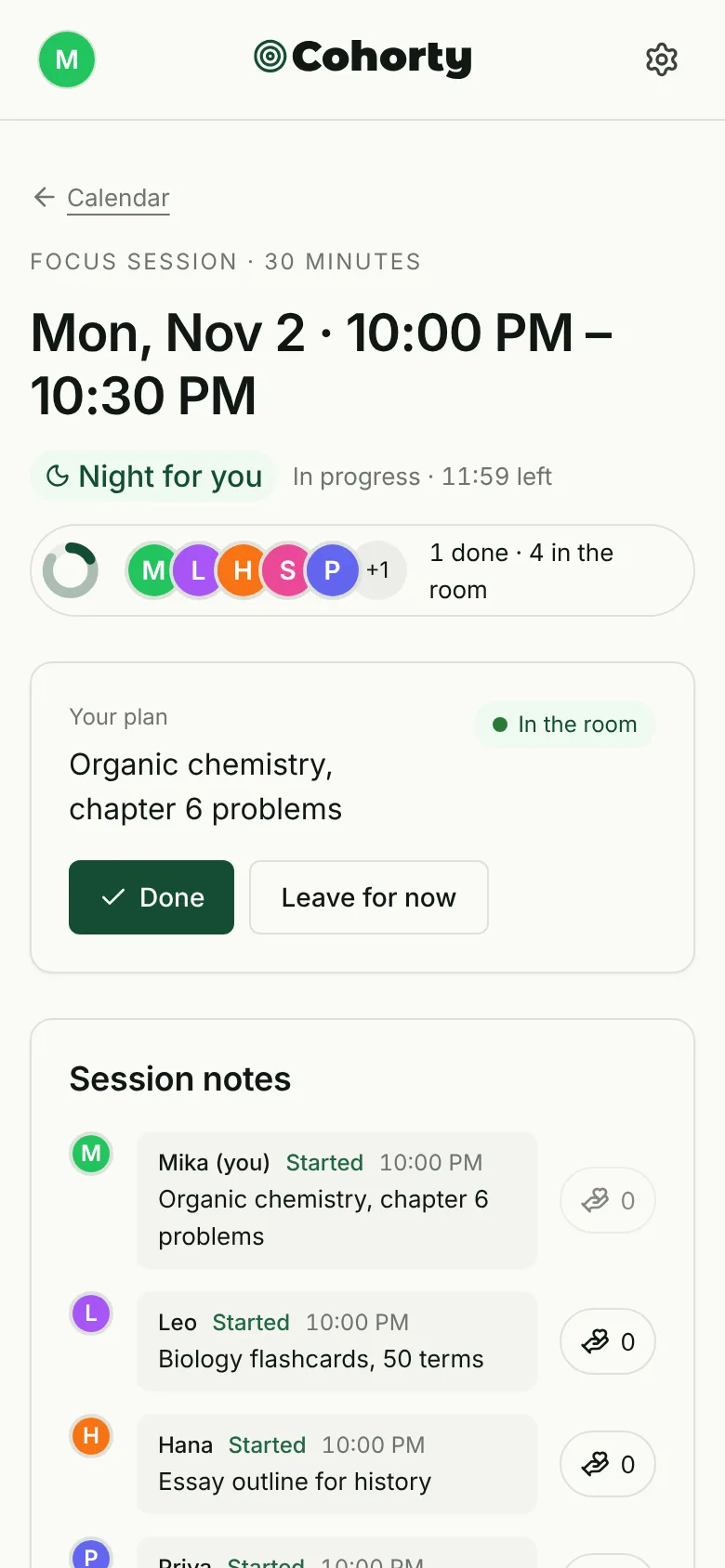
Disclosure: Cohorty publishes this journal. In Cohorty you book a 30-minute session, write what you’ll study in one line, and work alongside whoever booked the same time, with no camera or chat. You can book several sessions in a day, and missing one doesn’t reset anything. See ADHD-friendly focus sessions, or compare tools in our study buddy app guide.
Habit 5: Make the study space boring (in a good way)
- Phone in another room, or in a bag across the room, for the whole session.
- Only the tabs you need. Close everything else before you start, or use a separate browser profile for studying.
- Everything ready before the timer starts: notes, pens, water, charger.
- Some background sound if silence makes your mind wander: instrumental music, brown noise, café noise.
- Movement allowed. Standing, pacing while reciting, or a fidget toy can help focus. Studying doesn’t have to mean sitting still.
Habit 6: Make boring topics more interesting
- Turn it into a challenge: “How many cards can I get right in 10 minutes?”
- Switch formats: a video, a diagram, a podcast, then practice questions.
- Start with the part you find most interesting, then use the momentum.
- Connect it to something you care about: how would this matter in a job you’d want?
Habit 7: Protect against burnout
Cramming is tempting because it works in the short term. The cost comes after.
- Set a daily maximum, not just a minimum. Three or four focused sessions is a strong day.
- Stop at the end of a session even when it’s going well, and note where you’ll pick up. Ending on a good note makes the next start easier.
- Sleep before exams. Memory consolidation depends on it; an all-nighter usually costs more than it gains.
- Keep food, movement and time with people in the week. They’re part of studying, not a distraction from it.
Habit 8: Plan for missed days
You’ll miss sessions. Plan what happens next so a missed day doesn’t become a missed week.
- Don’t double up. Skip the missed session and do the next one as planned.
- Keep a record of sessions done, not sessions missed. If streak counters make you quit, avoid them; see habit trackers without streaks.
- Have a minimum version: ten flashcards counts on a bad day.
A sample exam-prep week
For a full plan from topic list to exam day, see how to prepare for exams; for general methods, see study habits and note-taking methods.
| Day | Session | Topic | Method |
|---|---|---|---|
| Mon | 7:00 PM, 30 min | Chemistry ch. 6 | Practice problems |
| Tue | 12:00 PM, 15 min | Biology terms | Flashcards |
| Wed | 7:00 PM, 30 min | History essay | Outline from memory |
| Thu | 12:00 PM, 15 min | Chemistry ch. 6 | Recall, then check |
| Fri | Rest | ||
| Sat | 10:00 AM, 30 min × 2 | Past paper | Timed |
| Sun | 6:00 PM, 15 min | Week review | Blank page recall |
Common questions
How long should I study at once with ADHD?
Short sessions work for most people: 15 to 30 minutes with a clear task, then a break. Several short sessions spread through the week usually beat one long one.
What’s the best study method for ADHD?
Active methods like practice testing, flashcards and past papers, spread over several days. They’re more effective than rereading for everyone, and more engaging for ADHD brains.
How do I stop procrastinating on studying?
Give each session a start time, a small specific task and, if possible, other people studying at the same time. See ADHD procrastination for more.
Can I get study support for ADHD at school or university?
Often, yes. Many institutions offer adjustments such as extra exam time, a quiet room or study skills support. Contact your student support or disability services office to ask.